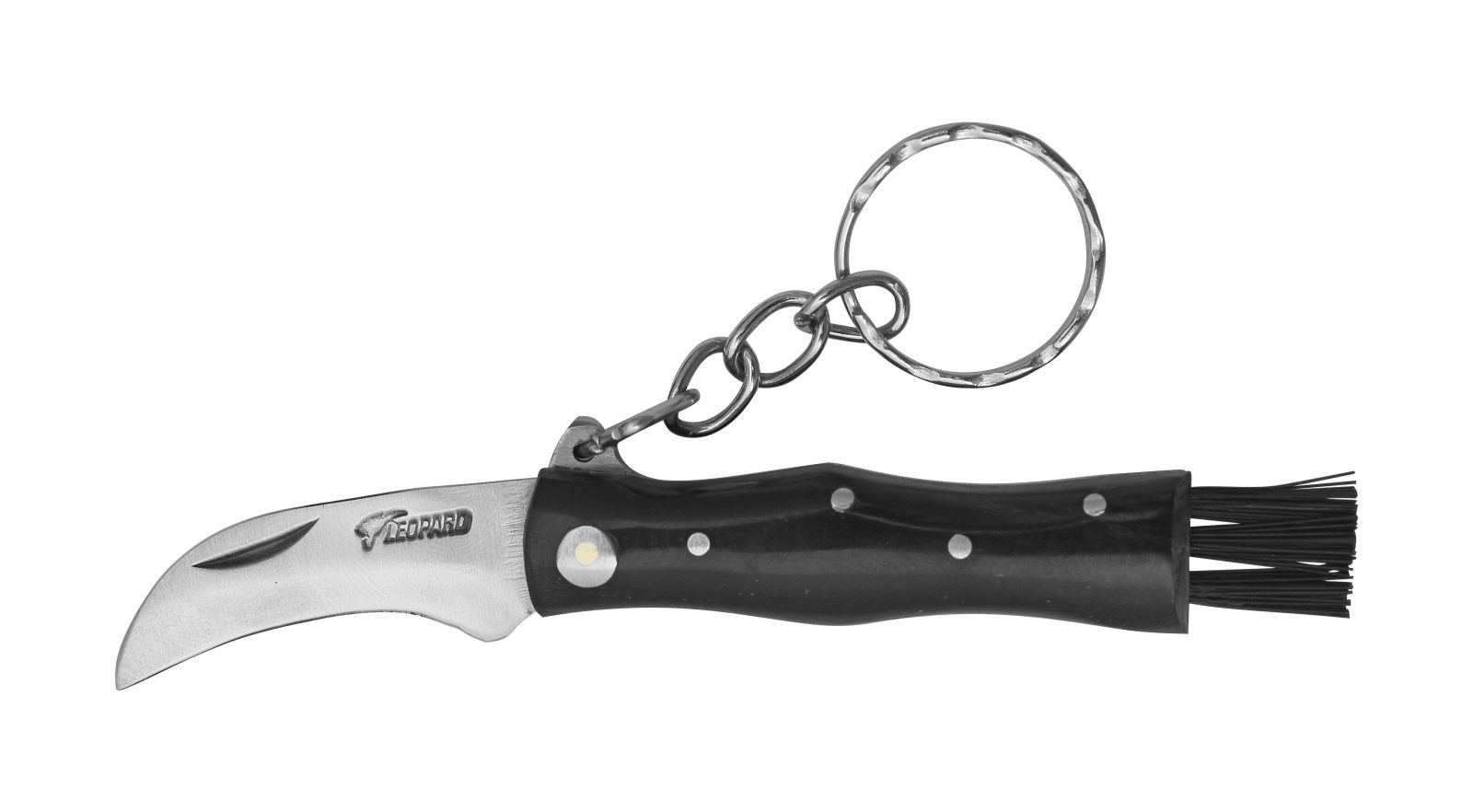
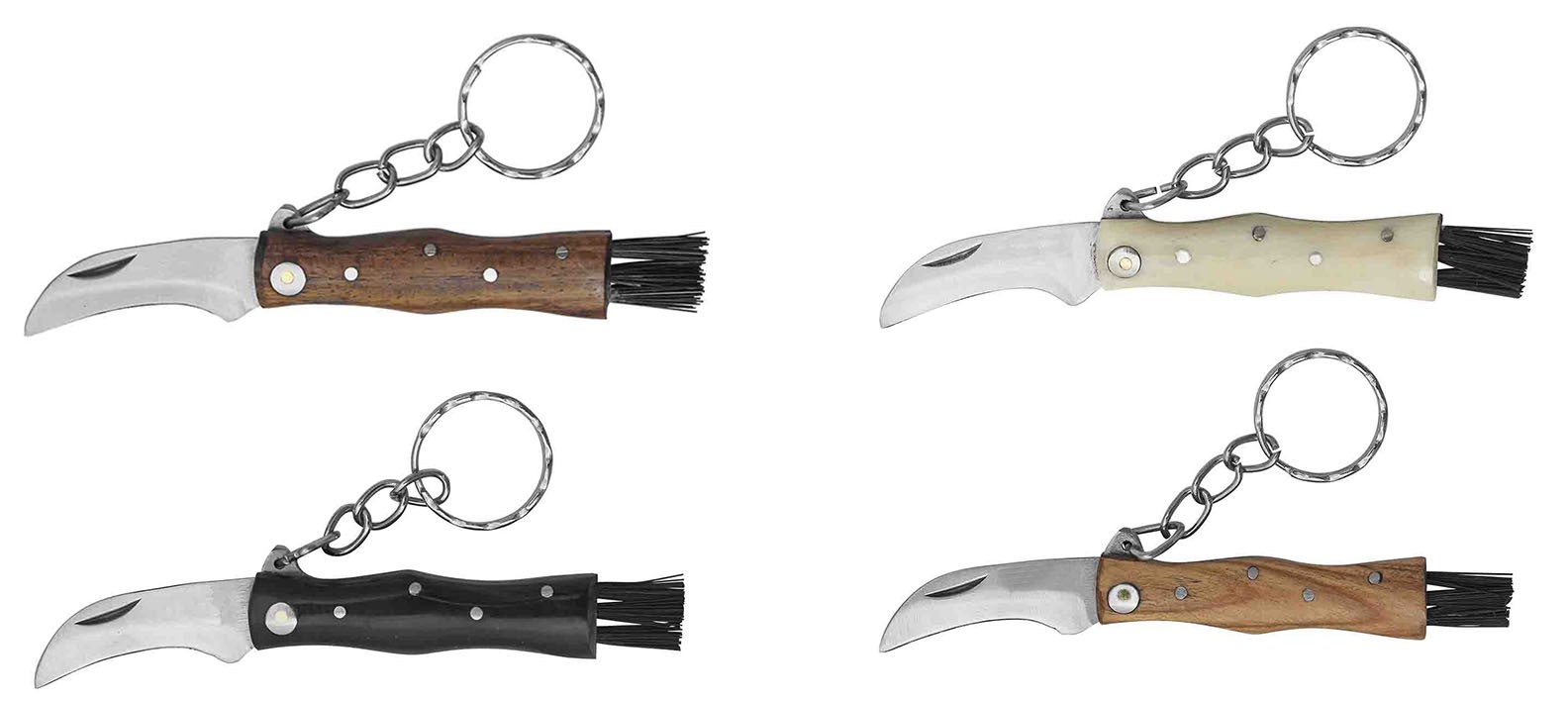
Dark Wood Handle Mushroom Folding Knife Keychain – 6 cm Handle, Cleaning Brush

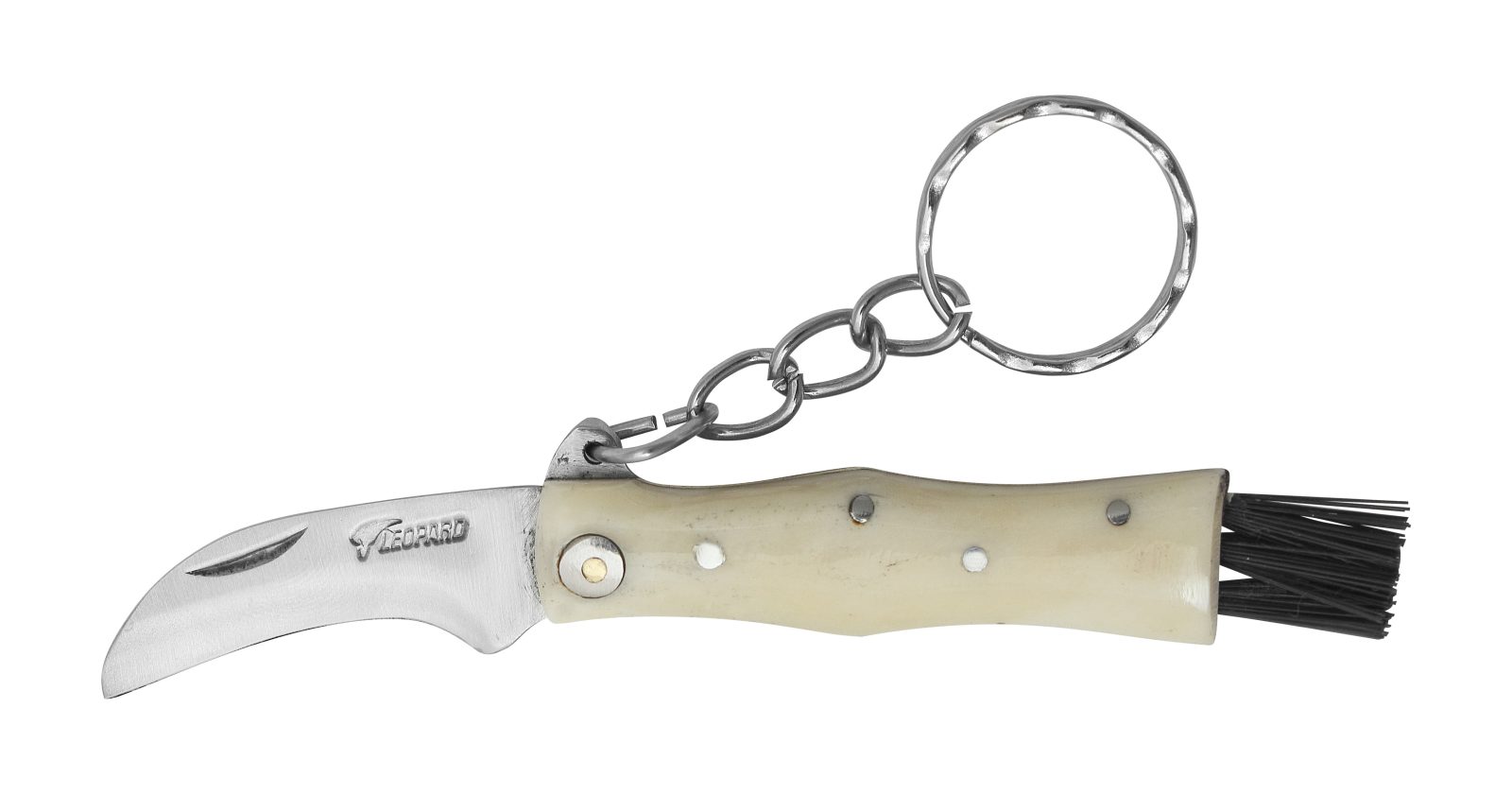
A hooked blade and built-in cleaning brush make this dark wood mushroom knife keychain a compact forager's tool, handcrafted in Pakistan.

$1.48
Unit price. Rates are degressive by quantity, size and material.
Wholesale $1.04 from 50 pcs
Ask about this item on WhatsApp
  • Factory direct Sialkot, since 1982
  • Worldwide shipping
  • Private label on request
  • Wholesale pricing by quantity

About this knife

This mushroom-shaped keychain knife pairs a curved stainless steel blade with a 6 cm dark wood handle and a hard-bristle brush for cleaning foraged mushrooms on the spot. Hand-finished in Pakistan, it's a distinctive, functional accessory for foragers and nature lovers — and a popular novelty wholesale item for gift shops and outdoor retailers.

Specifications

Weight
0.034 kg
Blade size (cm)
4
Handle size (cm)
6
Blade
Stainless steel
Handle
Dark wood
Brush
Hard bristles, for cleaning mushrooms
Knife Notes

Know-how from our Sialkot workshop

Questions & answers

Foragers ask: quality, price and the brush

Does Pakistan make good knives?

Sialkot, in Punjab, has made cutlery for buyers abroad for generations, and small folding patterns are a long-standing part of that trade. Still, judge this keychain on its own merits: the curved 4 cm stainless blade should swing out cleanly and sit centred when closed, the pins should be flush with the dark wood, and the bristles should be firmly anchored in the end of the handle.

What is the price of this mushroom keychain knife in Pakistan?

Shoppers in Pakistan see the unit price in rupees (PKR) at the top of the page and can order directly on WhatsApp. For gift shops and outdoor retailers taking a carton, the rate per piece falls as the quantity climbs; send us your numbers by WhatsApp or email for a wholesale quote.

Is the brush stiff enough for real foraging?

Yes. The bristles are hard, chosen to flick soil, pine needles and grit off caps and stems rather than to polish them. Use short strokes, go gently around the gills, which bruise easily, and tap the handle against your palm afterwards to clear the bristles.
Pro tip

Trim and brush before anything reaches the basket

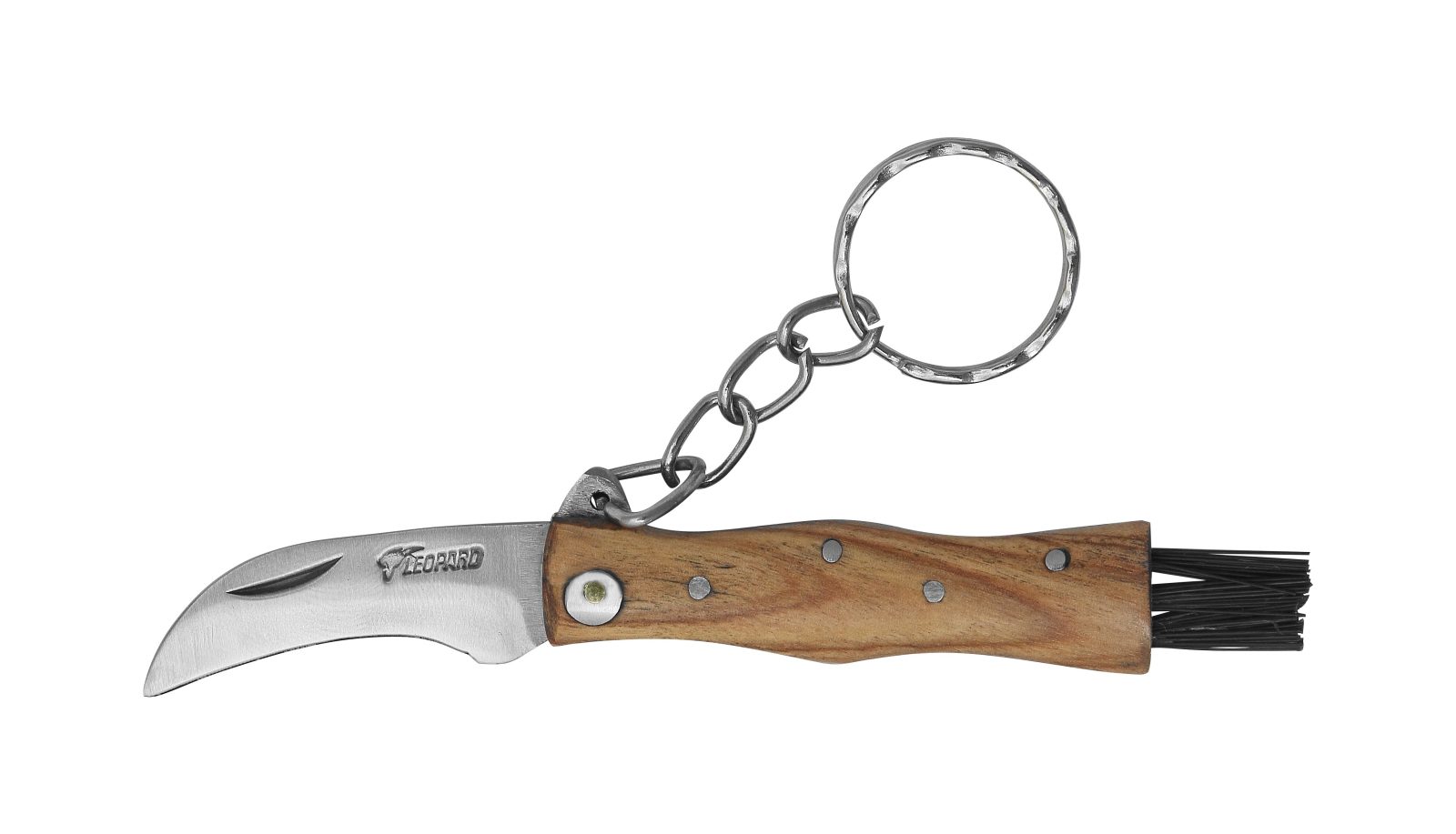
Clean each mushroom where you pick it. Cut the stem just above the soil with the curved 4 cm blade, then turn this little Pakistan stainless steel knife around and sweep earth and needles away with the bristles at the end of the 6 cm dark wood handle. Lay the mushroom cap-down in a ventilated basket. Grit left on one specimen soon ends up on all of them, and a clean harvest needs far less work in the kitchen.

The story

A forager's knife shrunk to fit a key ring

Mushroom knives grew out of the foraging traditions of central and southern Europe, where gathering ceps, chanterelles and morels is an annual family ritual. The pattern settled long ago: a short, curved blade to sever the stem cleanly, and a brush at the butt so each find could be cleaned before it joined the others. Folding versions became popular because they rode safely in a coat pocket between finds.

This version keeps both tools and scales them down to a 4 cm blade and a 6 cm dark wood handle, light enough at 34 g to stay on a key ring all year. Among the keychains made in Pakistan in our range, it is one of the few built for a specific outdoor job rather than general cutting, which is why it moves so easily from the gift counter to the woods.

Did you know?

Cutting or pulling hardly matters to the fungus

Foragers have argued for generations over whether a mushroom should be cut or twisted out of the ground. A Swiss field study that ran for close to thirty years found that neither method reduced later harvests, while regular trampling of the forest floor did lower the number of mushrooms that appeared. So a Pakistan knife like this one matters less for the fungus than for bringing home clean, intact stems.