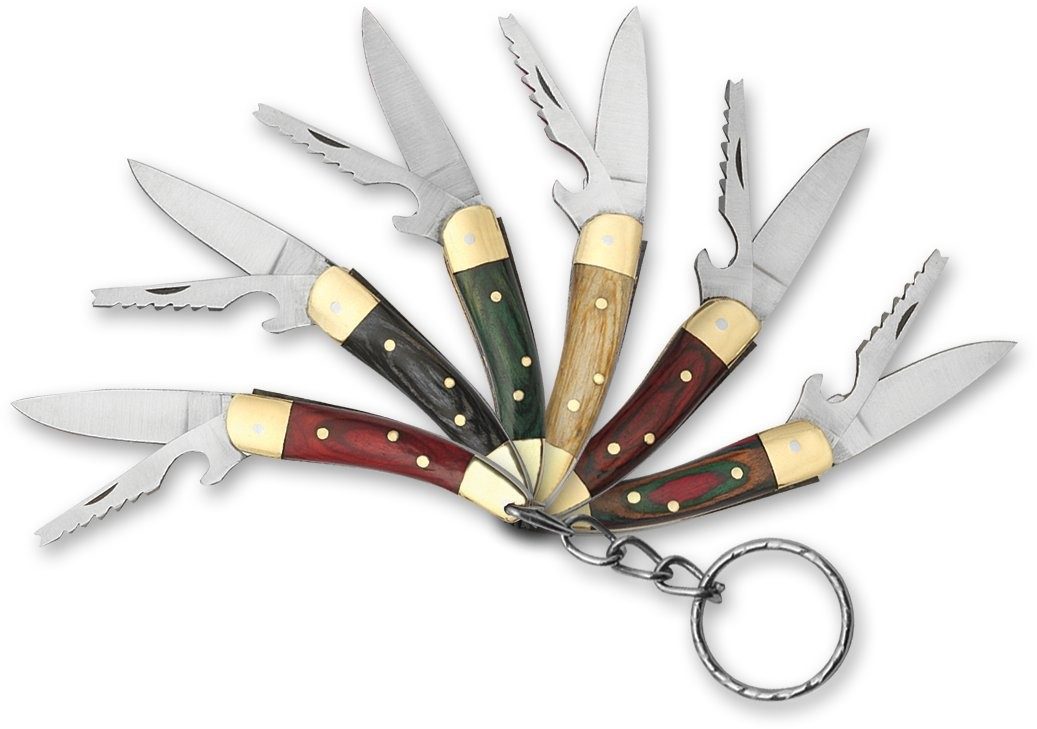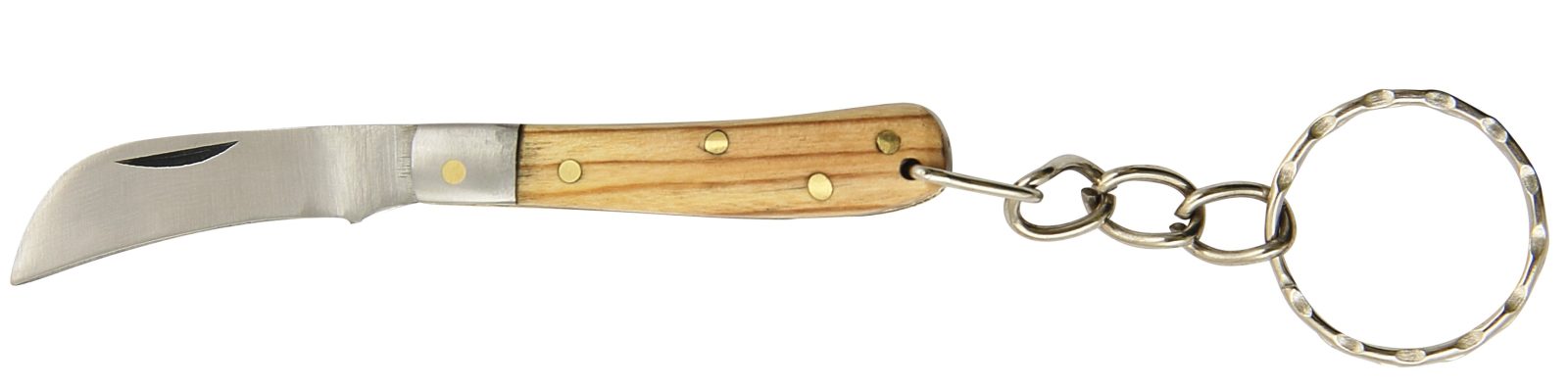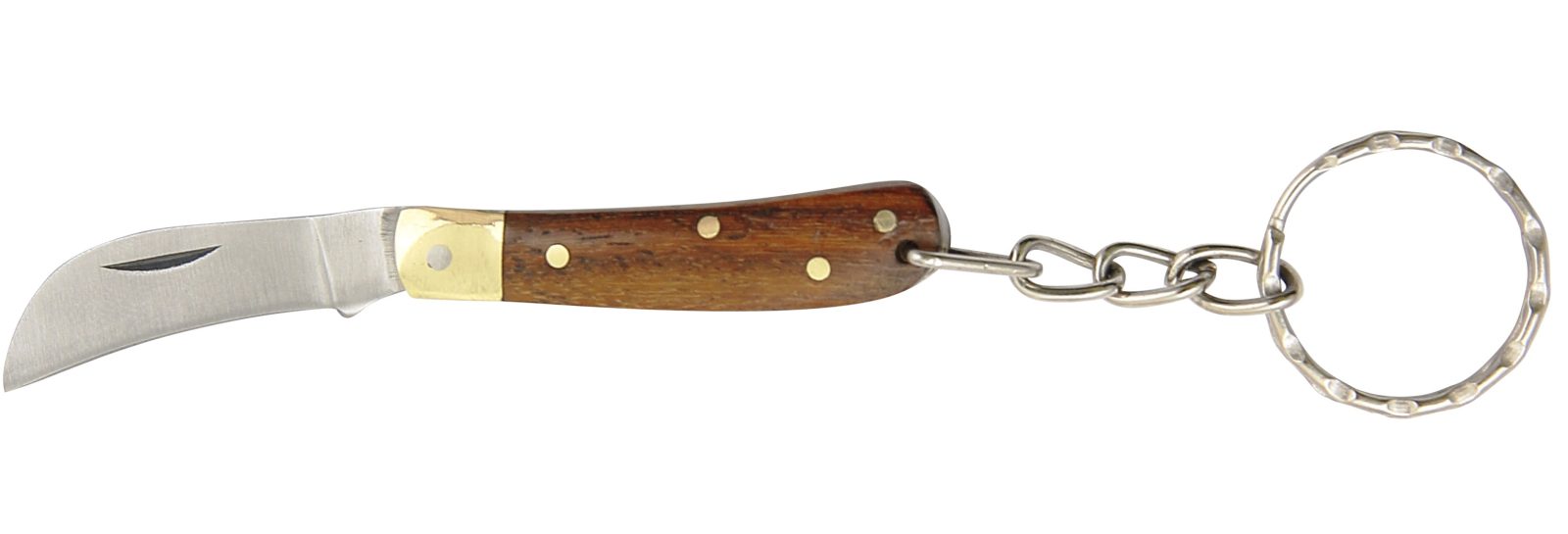
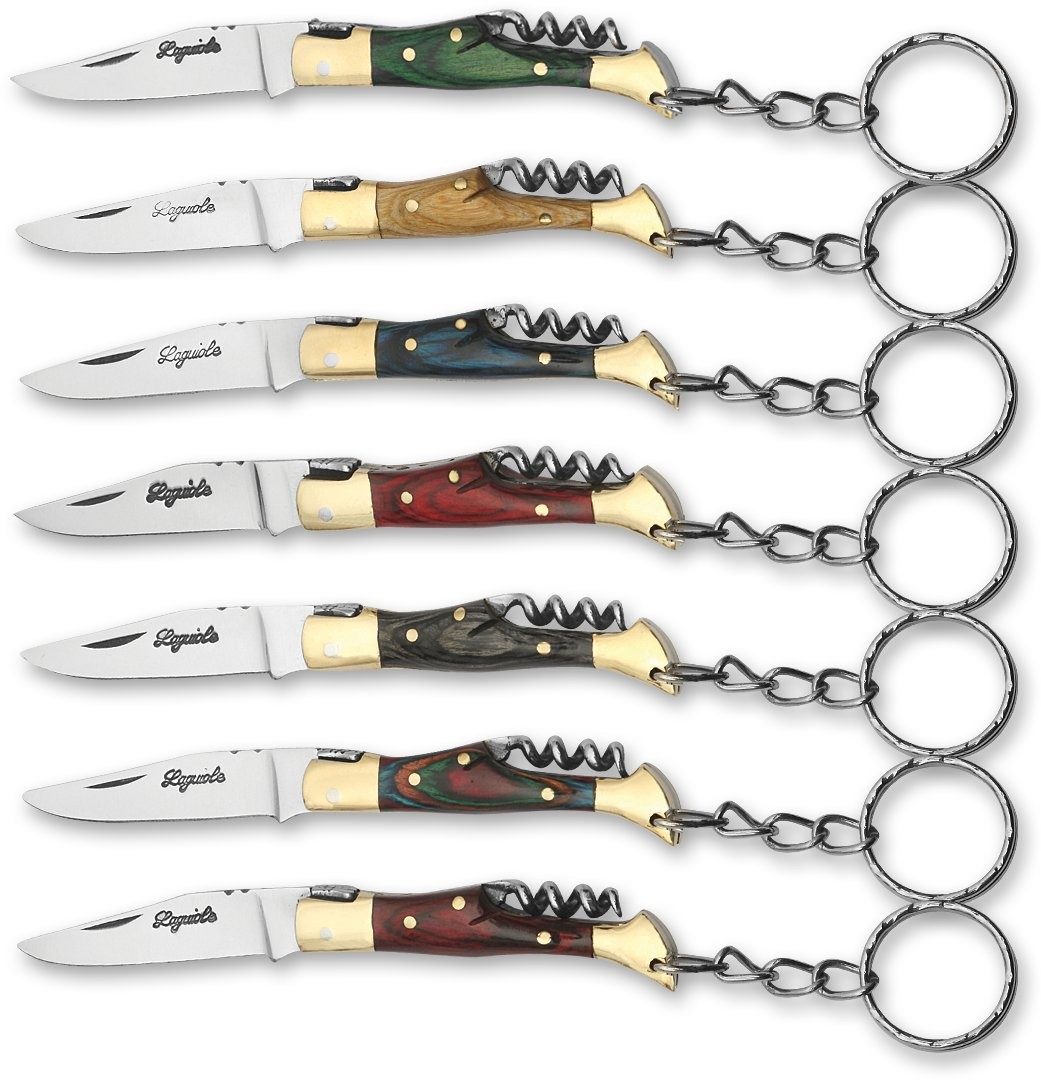
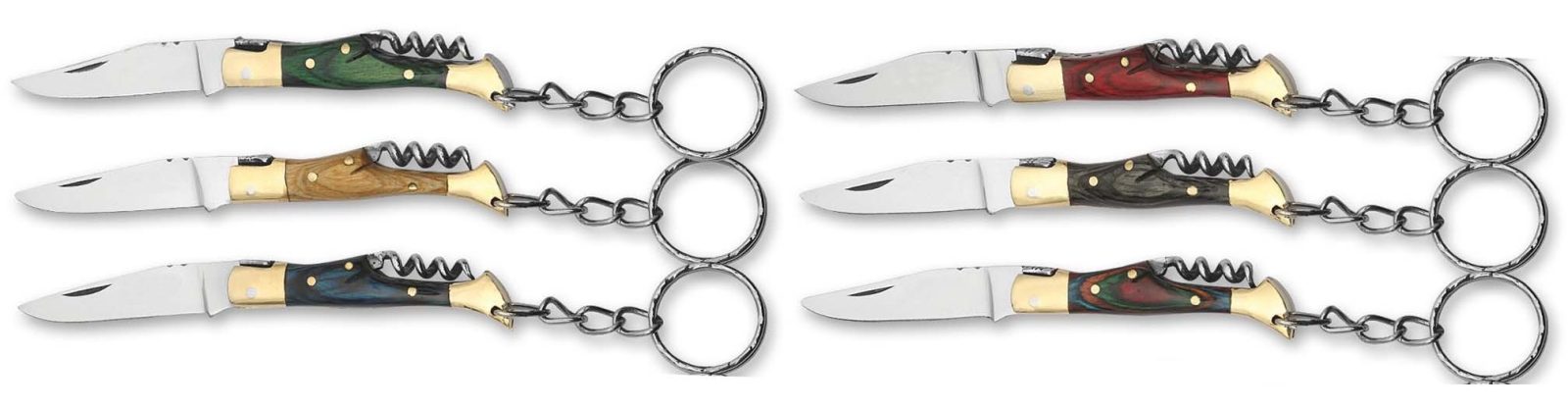
Dark Wood Handle Corkscrew Folding Knife Keychain – 6 cm Handle, Brass Bolster

This wholesale corkscrew knife keychain pairs a dark wood handle with a fold-out corkscrew tool, brass bolster, 6 cm, made in Pakistan.

$2.20
Unit price. Rates are degressive by quantity, size and material.
Wholesale $1.54 from 50 pcs
Ask about this item on WhatsApp
  • Factory direct Sialkot, since 1982
  • Worldwide shipping
  • Private label on request
  • Wholesale pricing by quantity

About this knife

This folding knife keychain combines a stainless steel blade with a fold-out corkscrew tool on a 6 cm dark wood handle and brass bolster. Manufactured in Pakistan, it's a genuine two-in-one wine accessory small enough for a keyring — a strong wholesale seller for gift shops, wine retailers and hospitality suppliers.

Specifications

Weight
0.03 kg
Blade size (cm)
4.6
Handle size (cm)
6
Blade
Stainless steel
Handle
Dark wood
Bolster
Brass
Knife Notes

Know-how from our Sialkot workshop

Care & maintenance

Wine, cork crumbs and a dark wood handle

Wine is acidic and sugary, and cork crumbs find their way into every gap, so this keychain rewards a short routine. Like most keychains made in Pakistan with a wooden handle, it needs nothing complicated:

  • After opening a bottle, wipe the corkscrew with a damp cloth and dry it before folding it away.
  • Brush cork crumbs out of the handle with a soft, dry toothbrush.
  • Wipe spilt wine off the dark wood straight away, before it can soak into the grain.
  • Rub the brass bolster with a soft cloth when it dulls, or let it take on a mellow patina.
  • Add a drop of light oil to each pivot now and then, so both the 4.6 cm blade and the corkscrew open smoothly.

The story

Why a corkscrew belongs on a key ring

Corks only became a problem once glass bottles were strong enough to hold them tight. In seventeenth-century England, sturdier dark glass made it practical to drive a cork right into the neck, and drinkers needed a tool to draw it out again. Early versions were called bottlescrews, and they are often said to descend from the gun worm, a spiral tool used to clear stuck wadding from musket barrels.

Travellers soon wanted that spiral in a pocket, together with a blade for bread, string or sealing wax. This dark wood keychain keeps the pairing: a fold-out corkscrew and a 4.6 cm stainless blade in a 6 cm handle with a brass bolster. Two-tool folders of this kind remain a familiar sight among the Pakistan-made knives sold through gift and wine shops.

Quality check

Four checks for a knife-and-corkscrew folder

A two-tool keychain has twice as many things to inspect as a plain folder, but the routine is still quick. On arrival, take a sample from each box and check that:

  • The corkscrew opens fully and its spiral runs straight, ending in a sharp, centred point.
  • Both the corkscrew and the 4.6 cm blade fold completely into the 6 cm handle, without one fouling the other.
  • The brass bolster meets the dark wood flush, and the pins are smooth.
  • The blade edge is even along its length, ready for cutting foil capsules.

Try the corkscrew on a spare cork too. A stainless steel Pakistan knife that bites cleanly and pulls without bending has passed the test that matters to wine buyers.

Questions & answers

Corkscrew keychain questions from wine shops

Does Pakistan make good knives?

Pakistan, and Sialkot in particular, is one of the established names in cutlery and surgical instruments, trades that both depend on precise grinding and fitting. For a corkscrew keychain the proof is simple: the spiral should be straight and sharp, both tools should fold flush, and the brass bolster should sit tight against the wood. If yours does all three, it is a well-made piece.

What is the price of this stainless corkscrew keychain?

Look at the top of this page for the unit price, which visitors in Pakistan see in rupees (PKR). Wine retailers and hospitality suppliers buying by the box pay progressively less per knife; ask on WhatsApp or by email for a wholesale rate.

Can the blade cut foil capsules?

Yes. The 4.6 cm stainless blade is the right size for scoring the foil just below the lip of the bottle before you draw the cork, which also stops the wine from running over a ragged edge when it is poured.