
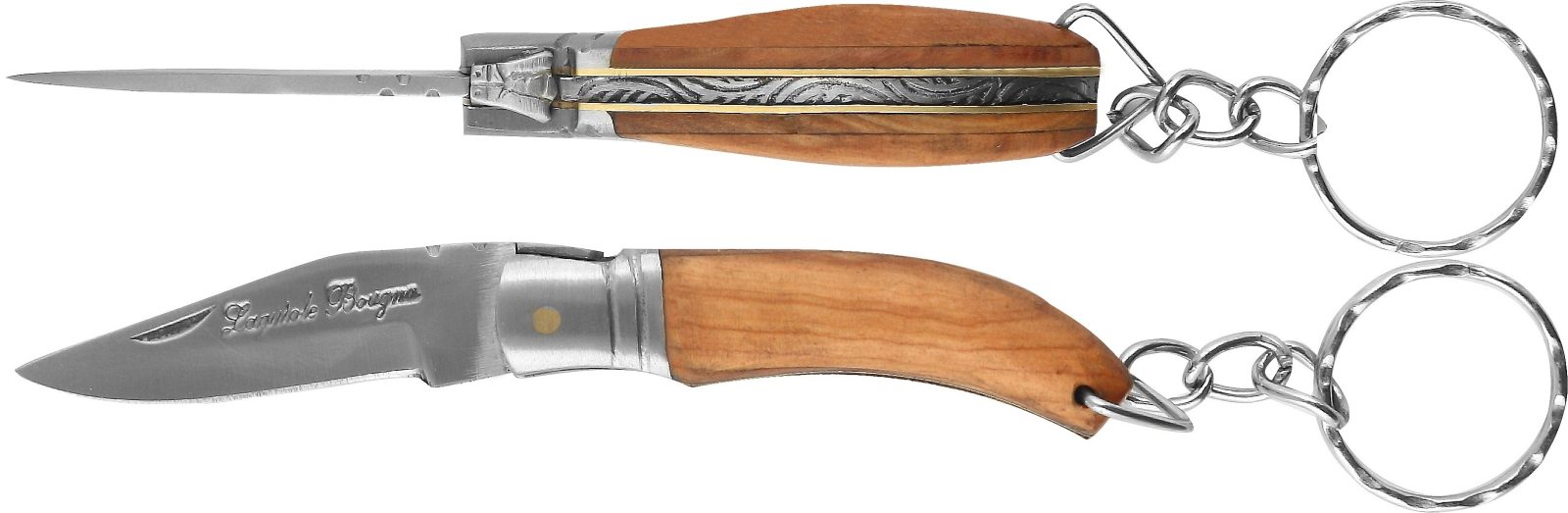

Teak Wood Handle Folding Knife Keychain – 6 cm Handle, Inox Bolster

This Pakistan-made pocket knife keychain pairs a slim spear-point blade with a teak wood handle and a decorative Damascus-pattern spine, 6 cm.

$1.85
Unit price. Rates are degressive by quantity, size and material.
Wholesale $1.30 from 50 pcs
Ask about this item on WhatsApp
  • Factory direct Sialkot, since 1982
  • Worldwide shipping
  • Private label on request
  • Wholesale pricing by quantity

About this knife

This folding pocket knife keychain features a slim, pointed stainless steel blade with a decorative Damascus-pattern spine, set into a 6 cm teak wood handle with a brass and steel bolster. Handcrafted in Pakistan, it has the look of a traditional pocket knife scaled down for a keyring — a distinctive wholesale item for retailers wanting a more refined keychain option.

Specifications

Weight
0.037 kg
Blade size (cm)
4.6
Handle size (cm)
6
Blade
Stainless steel
Handle
Teak wood
Bolster
Inox
Knife Notes

Know-how from our Sialkot workshop

Questions & answers

Damascus questions, answered honestly

Are Damascus knives from Pakistan any good?

Pattern-welded Damascus from experienced Sialkot smiths can be very good; judge it by an even, crisp pattern and a well-finished edge. Be clear about what this keychain is, though: its slim spear-point blade is plain stainless steel, and the Damascus pattern decorates the spine. You get the look of patterned steel along the back of the knife with none of the extra care.

What is the price of this Damascus-pattern keychain in Pakistan?

Visitors in Pakistan see its price in rupees (PKR) at the top of this page and can order via WhatsApp. Because the blade is stainless rather than pattern-welded, it sits at keychain prices rather than Damascus-knife prices; for retail quantities, ask us for a wholesale rate by WhatsApp or email.

What does the patterned spine add?

It is decorative. The spine catches the light when the closed knife is turned in the hand, and it makes this keychain feel like a traditional pocket knife in miniature, alongside its teak handle and steel bolster.

Display & retail

Show the spine, not just the side

Most keychains are displayed side-on, but this one's best feature, the decorative Damascus-pattern spine, shows best from above.

  • Lay one closed, spine up, on a small dark pad so the pattern faces the customer.
  • Place a second one open beside it to show the slim spear-point blade and steel bolster.
  • Display it near genuine Pakistan Damascus knives, with a card stating that the pattern here is decorative and the blade stainless; clear labelling builds trust.
  • Group it with the other teak pieces to show the step up from a plain keychain.
Pro tip

Clean the spine pattern with a soft toothbrush

Pocket lint and grime settle into the recesses of a patterned spine and dull it. Once a month, brush along the spine with a dry, soft toothbrush, then wipe it with a cloth. A tiny drop of oil on the cloth restores the sheen on the steel without soaking the teak. On a Pakistan knife with a wood handle this small, two minutes of care keeps the detail sharp.

Did you know?

Why Damascus steel started life in South India

The original Damascus blades were forged from wootz, a crucible steel made in South India and Sri Lanka and shipped as ingots to smiths across the Middle East, Damascus among them. The old method had faded out by the 19th century, and most modern Damascus, including that of the Pakistan knife trade, is pattern-welded: layers of different steels forged together and etched to reveal the waves.





