About this knife

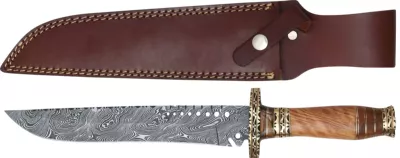
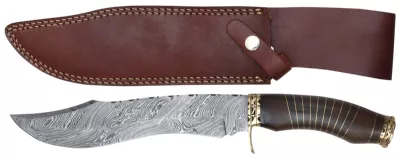
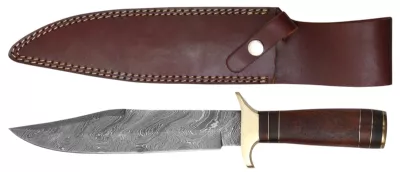
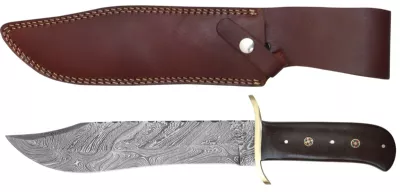
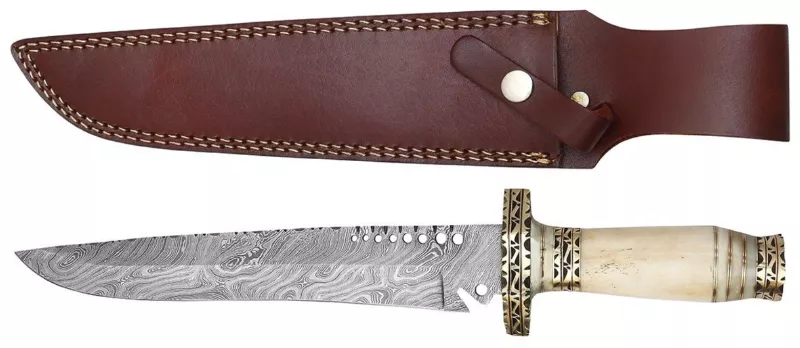
This fixed-blade knife features a 25 cm hand-forged Damascus steel blade with a decorative sawback spine punched with round cutouts, hand-engraved brass fittings and a 14 cm white bone handle. Manufactured in Pakistan, it's the bone-handle counterpart to the wood-handle version in the same ornate Damascus range. A standout wholesale item for retailers targeting serious knife collectors.

Specifications

Weight
0.722 kg
Blade size (cm)
25
Handle size (cm)
14
Blade
Damascus steel
Handle
Bone
Included
Leather case
Total length (cm)
39
Knife Notes

Know-how from our Sialkot workshop

Questions & answers

Bone-handled sawback: questions and answers

What is the Damascus knife price in Pakistan?

US$46.75 per piece (PKR 13,590 for buyers in Pakistan). From 50 pieces the price drops to US$32.73 per piece. For a larger order, send us the quantity on WhatsApp or by email and we will quote a lower rate.

How does it differ from the teak version?

Blade, sawback and engraved brass are identical: 25 cm of Damascus and 39 cm overall. Only the handle changes, white bone here for a light, ivory-like look, and teak on the sibling for a warmer, darker one.
Quality check

Hairline cracks, specks and engraved brass: what to check

Natural bone has its own quirks, so a quality check on this Pakistan Damascus knife starts with the handle:

  • Look along the 14 cm bone handle for hairline cracks, especially near the brass fittings.
  • Small specks and variations in tone are natural; deep stains or soft spots are not.
  • Check that the hand-engraved brass sits flush against the bone at both ends.
  • The sawback cutouts should be evenly spaced and free of sharp burrs.
  • Confirm the blade seats fully in the leather case, which should close without pressure on the edge.
Best uses

Showpiece settings for a bone-handled sawback

With a 25 cm blade and a white bone handle, this is a showpiece first. The hand-engraved brass and the decorative sawback reward close viewing, so the best settings let people look at it from arm's length. Retailers sell it for:

  • Collectors' glass cabinets
  • Light-and-dark pairs with the teak version
  • Wall displays in studies and lodges
  • Anniversary and retirement presents
  • Themed restaurant or bar decor
  • Occasional camp and outdoor use
The story

Bone, the handle material that replaced ivory

Bone has been used for knife handles for as long as people have made knives, and for good reason: it is hard, it takes a polish, and it has always been available as a by-product of livestock. As ivory became scarce and then restricted, bone took its place on fine cutlery, offering a similar pale warmth without the ethical cost. Cutlers learned to dye it, jig it for texture, or leave it smooth and white.

This Pakistan knife with a bone handle keeps the plain white finish, which shows off the hand-engraved brass fittings at each end. Paired with a 25 cm Damascus blade and its decorative sawback, the bone gives the knife a light, classic presence.