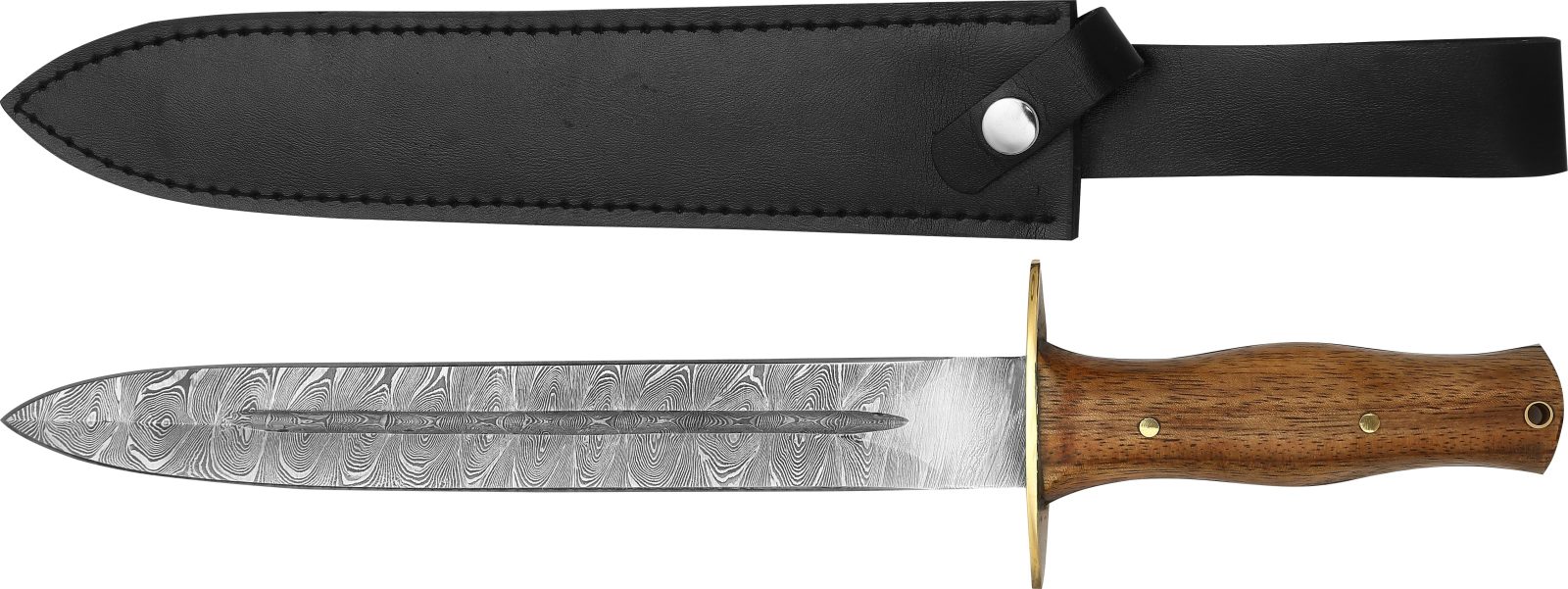
From Viking-age swords to a walnut-handled dagger
Long before stainless steel existed, smiths in early medieval Europe learned to twist and forge-weld bars of different iron and steel into a single blade. The technique, now called pattern-welding, gave swirling surfaces to many swords of the Migration period and the Viking Age, then fell out of use as more uniform steel became available. Bladesmiths revived it in the late twentieth century, and it is the method behind what most people now call Damascus.
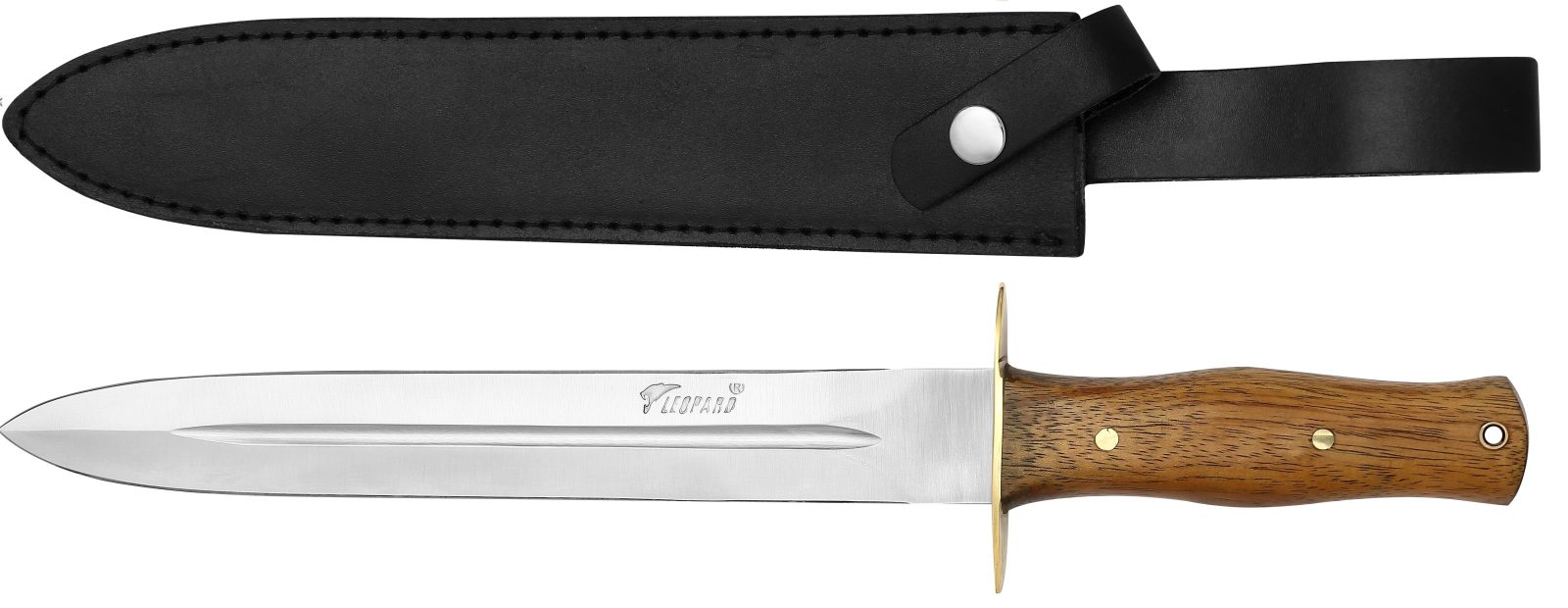
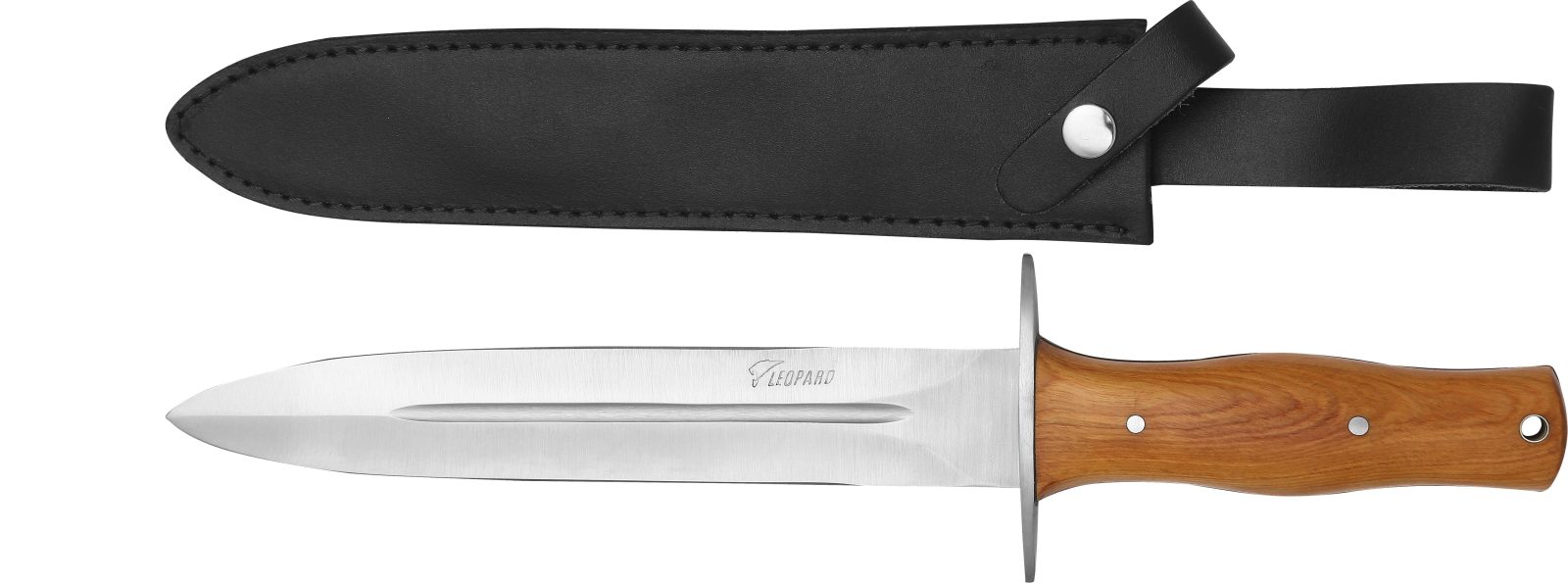
In Sialkot, Damascus has become a speciality of the knife trade, and daggers are among its most striking pieces. This one carries the pattern along a 27.5 cm blade with a central fuller, finished with a polished brass guard and a 13 cm walnut handle. Of the Pakistan Damascus knives for sale in our range, it is one of the pieces most clearly made for display.