The story
Wootz, Damascus and the skinner on your belt
The name Damascus is usually linked to blades traded through the markets of Damascus, in Syria, during the medieval period. Many of them were forged from wootz, a crucible steel made in India and Sri Lanka whose carbide bands gave the surface a watery pattern. The method was lost by around the eighteenth century, and metallurgists only explained how those bands formed in recent decades.
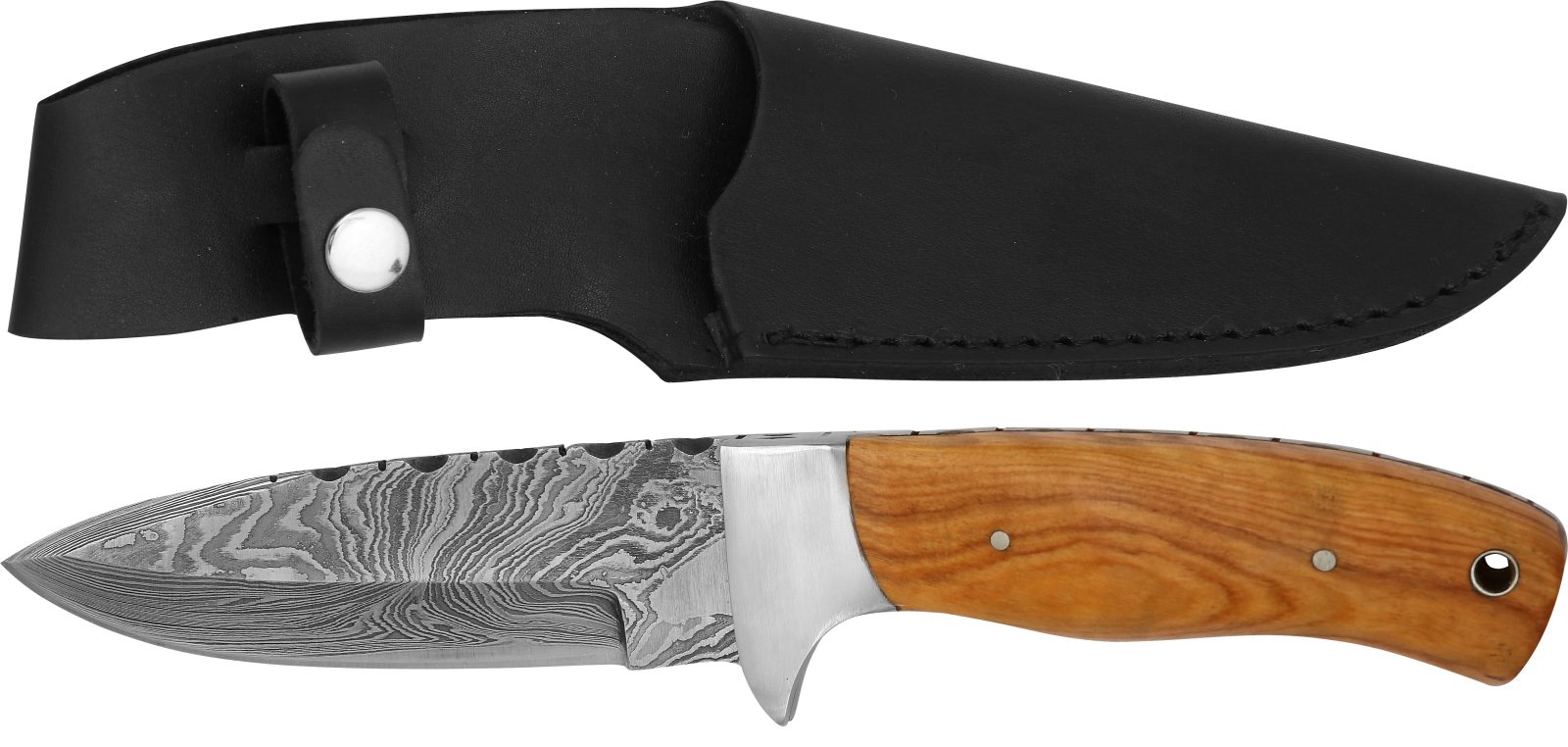
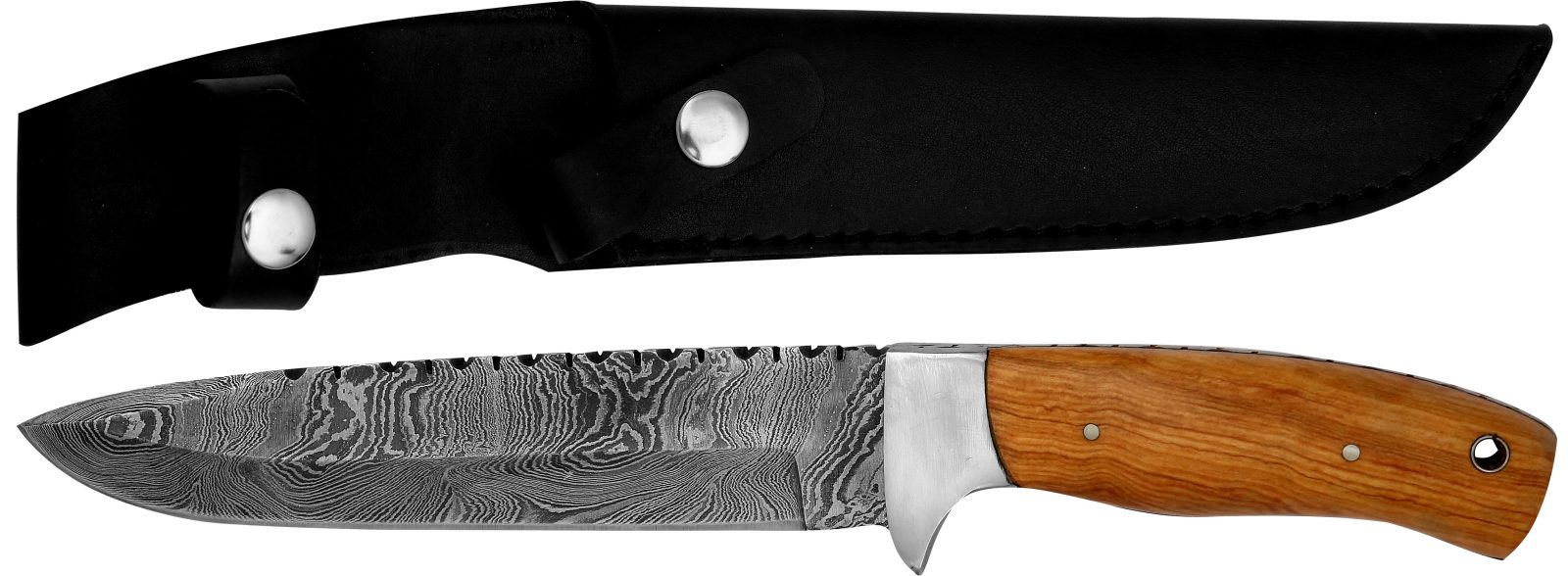
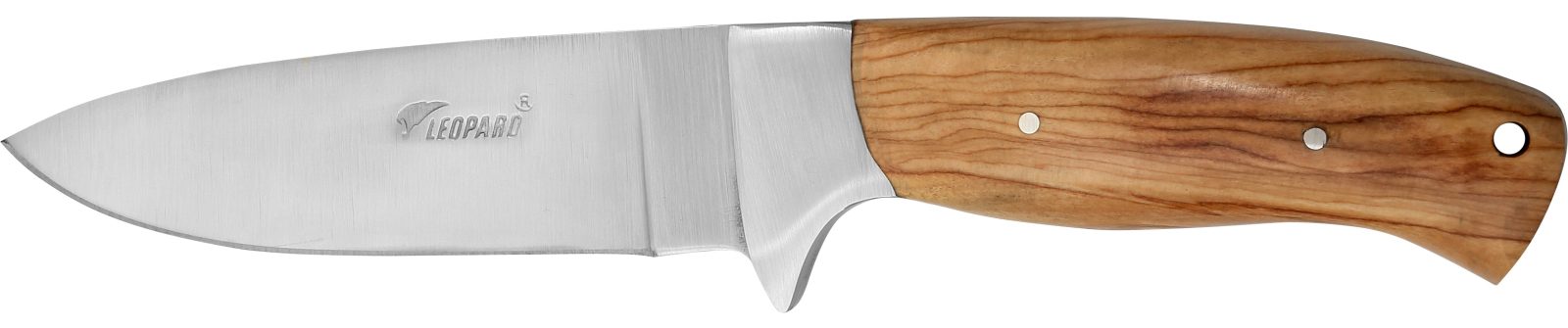
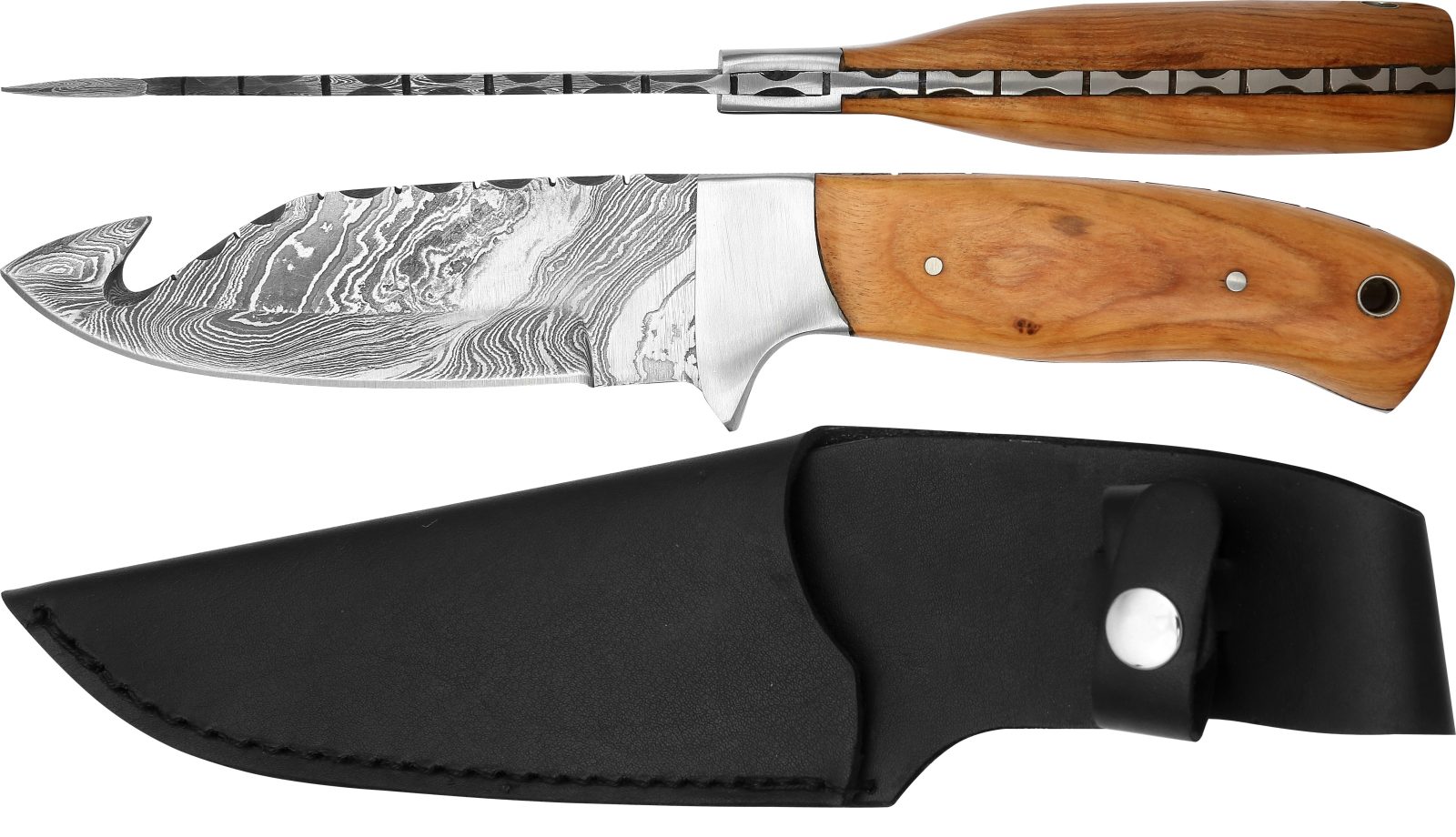
Today's Pakistani Damascus reaches a similar look by another route: layers of steel are forge-welded, folded and etched so they show as ripples. On this skinner the pattern runs along a 12 cm blade with an integrated gut hook and a decoratively notched spine, set into an olive wood handle. It is a working knife that carries a long tradition on its flats.