About this knife

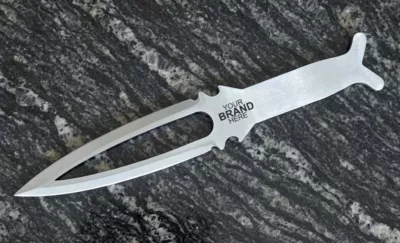
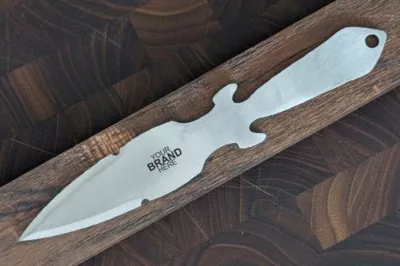
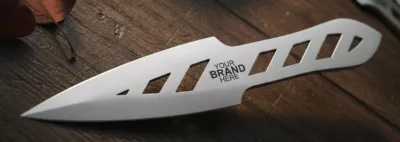
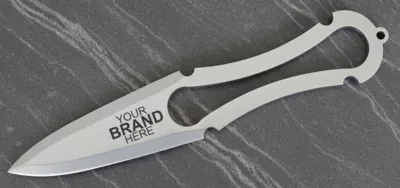
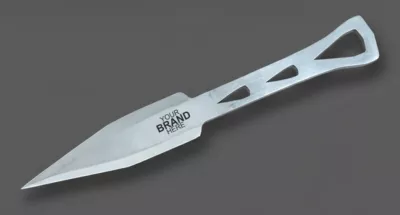
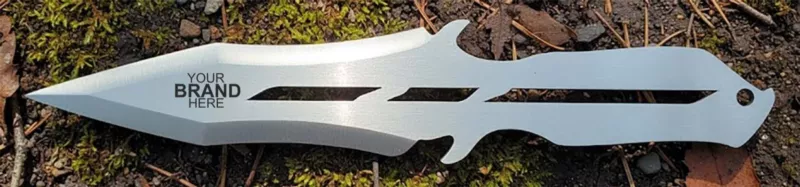
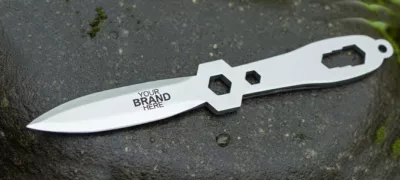
This throwing knife is machined from a single 2.5 mm thick piece of stainless steel, with a double-edged dagger blade and a winged, flared guard above a triple-slotted grip. Manufactured in Pakistan, it ships to wholesale buyers with private label and custom branding available. A wholesale item for retailers wanting a winged-guard dagger throwing knife.

Specifications

Manufacturer
Pakistan Knives Factory, Sialkot, Pakistan
Weight
0.138 kg
Blade
Stainless steel
Total length (cm)
20
Thickness
2.5 mm
Knife Notes

Know-how from our Sialkot workshop

Sharpening

Tracing a template to keep the dagger symmetrical

A Pakistan dagger knife built for the target needs a true point far more than keen edges, and the winged guard gives you a handy reference while you work.

  1. While the knife is new, trace its outline on stiff card and keep the template.
  2. After a session, dress any burrs on the double edge with a fine file, working from the flared guard towards the point.
  3. Lay the knife on the template now and then: both edges should still follow the traced line, with the tip centred between the wings.
  4. Leave the edges themselves unsharpened, since your fingers rest on them in a blade grip.
  5. Finish with fine abrasive paper and a dry cloth.
Questions & answers

Dagger questions: weight, rust and price

Where do I find the dagger knife price in Pakistani rupees?

US$2.60 per piece (PKR 1,228 for buyers in Pakistan). From 50 pieces the price drops to US$1.82 per piece. For a larger order, send us the quantity on WhatsApp or by email and we will quote a lower rate.

Is it heavier than the other dagger throwers?

Slightly. At 138 g it is the weightiest of our dagger-outline throwers, and that extra mass gives a calm, steady spin that many throwers like. The difference from its siblings is only a few grams, though.

Will the winged guard rust where it meets the blade?

It cannot separate or trap water in a joint, because guard, blade and grip are one piece of steel. As a stainless Pakistan dagger it resists rust, though wood sap left in the inside corners of the wings should be wiped off before storage.

Did you know?

The arms of a guard are called quillons

The flared wings on this dagger echo a feature with its own name: on swords and daggers, the arms of the crossguard are called quillons. On historical blades they protected the hand; here, cut from the same 2.5 mm plate as the blade, they mainly give the outline its character and make this Pakistan knife easy to recognise in a rack.