About this knife

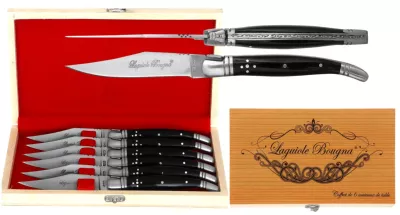
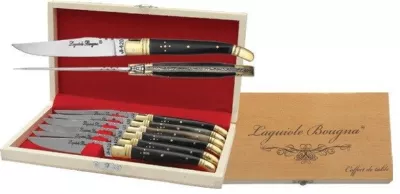
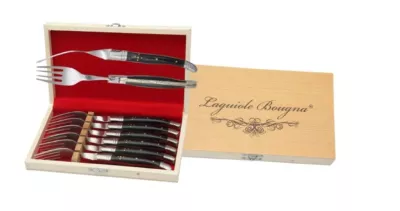
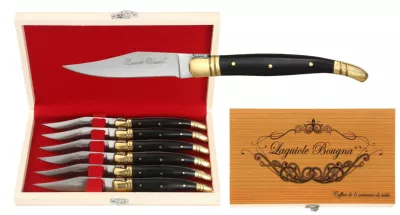
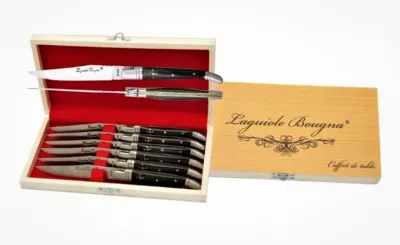
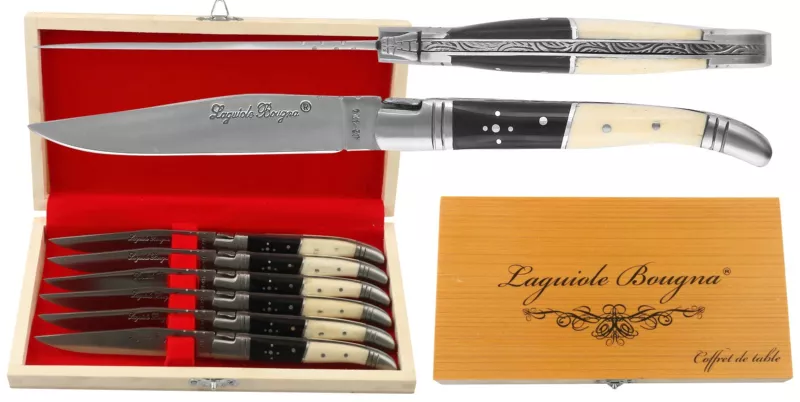
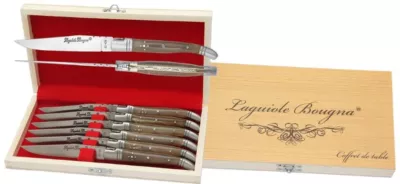
This table knife set pairs six 11.5 cm 420-steel blades with 12 cm two-tone handles combining black horn and white bone sections, finished with a polished inox bolster, plus a matching sharpening steel, all in a wooden presentation case. Manufactured in Pakistan, the contrasting materials make it the most decorative set in the range. A wholesale item for retailers targeting tableware and dining gift customers.

Specifications

Manufacturer
Pakistan Knives Factory, Sialkot, Pakistan
Weight
0.981 kg
Blade size (cm)
11.5
Handle size (cm)
12
Blade
420 Steel
Handle
Horn & white bone
Bolster
Inox
Knife Notes

Know-how from our Sialkot workshop

How to use

Cutting steak cleanly with a table knife

A table knife does its best work with a light hand. With this set:

  1. Hold the fork in your left hand, tines down, and press it into the meat near the corner you will cut from.
  2. Grip the two-tone handle so the end rests in your palm and your forefinger lies along the top, guiding rather than pushing.
  3. Draw the 11.5 cm blade towards you in long, gentle strokes; short sawing tears the fibres and squeezes out the juices.
  4. Cut one bite at a time, close to the fork, and keep the rest of the steak whole so it stays warm.
  5. Between courses, rest the knife on the plate rather than the tablecloth.

Good Pakistani cutlery does the rest: a keen edge cuts under its own weight.
Questions & answers

Decorative two-tone set: your questions

What is the price of this horn and bone knife set in Pakistan?

US$27.50 per piece (PKR 8,200 for buyers in Pakistan). From 50 pieces the price drops to US$19.25 per piece. For a larger order, send us the quantity on WhatsApp or by email and we will quote a lower rate.

How is it different from the two-tone set without the steel?

The handles and bolsters match; the difference is the sharpening steel included here, which suits buyers who want to keep the edges keen at home.

Care & maintenance

Caring for a handle made of two materials

Where black horn meets white bone, the joint is the part to protect, and water is its main enemy.

  • Wash each knife on its own in warm soapy water, holding it by the bolster so the handle stays mostly out of the bowl.
  • Dry immediately, paying attention to the line where the two materials meet.
  • Rub a little mineral oil into the horn now and then; the bone needs only a soft cloth.
  • If the white bone knife sections pick up stains from tea or tomato sauce, a paste of baking soda and water, rubbed gently and wiped off, usually lifts them.
  • Store the set in its case, never in a damp drawer.
Sharpening

Marker ink shows you the right angle

If you are unsure whether you are holding the right angle on the steel, let a felt-tip pen tell you.

  1. Colour the narrow bevel along the edge of one 11.5 cm blade with a marker.
  2. Make three light strokes on the steel at what feels like 20 degrees.
  3. Look at the bevel: ink rubbed off only at the very edge means your angle is too steep; ink gone only from the top of the bevel means it is too shallow.
  4. Adjust until the strokes clear the ink evenly, then hone the other five knives the same way, four or five strokes per side.
  5. Wash off the remaining ink and dry the blade before it goes back in the case.