About this knife

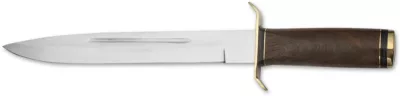
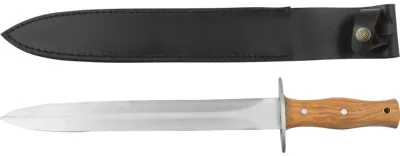
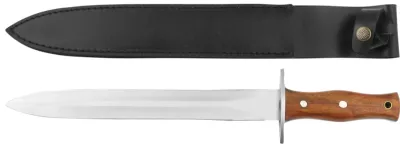
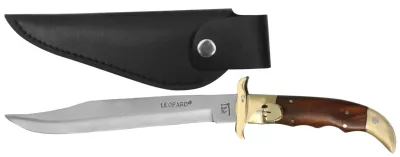
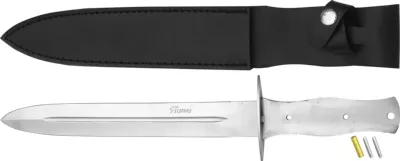
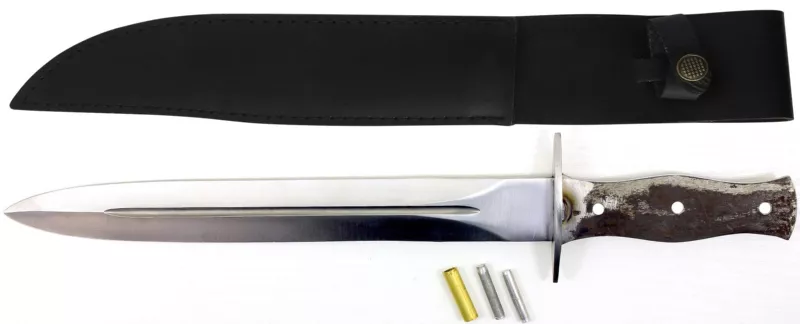
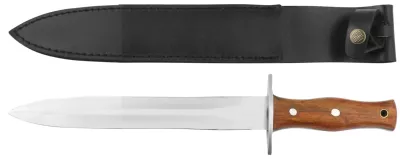
This 28.4 cm stainless steel dagger blade blank comes with its steel guard already fitted and a set of loose mounting rivets, ready for a knife maker to fit their own handle scales over the bare tang. Manufactured in Pakistan, it ships with a leather case and suits hobbyists and small workshops building custom daggers. A wholesale component for retailers supplying the knife-making trade.

Specifications

Manufacturer
Pakistan Knives Factory, Sialkot, Pakistan
Weight
0.561 kg
Blade size (cm)
28.4
Handle size (cm)
12
Blade
Stainless steel
Handle
Dark wood
Included
Leather case
Included
Mounting rivet
Knife Notes

Know-how from our Sialkot workshop

Questions & answers

Finishing a stainless dagger blank

What does the stainless dagger blank cost in Pakistan?

US$11.00 per piece (PKR 3,580 for buyers in Pakistan). From 50 pieces the price drops to US$7.70 per piece. For a larger order, send us the quantity on WhatsApp or by email and we will quote a lower rate.

What do I need to finish it?

Two handle scales of your choice, epoxy and basic tools: a drill, files or a belt sander, and fine abrasive paper. As a knife made in Pakistan with its steel guard already fitted and the mounting rivets included, the main job left is shaping the scales over the 12 cm tang.

Which handle materials suit it?

Dense hardwoods such as walnut, teak or acacia are the easiest to start with. Horn and bone look striking but need slower sanding and more care with heat.
Did you know?

Peened pins came long before epoxy

Long before epoxy existed, cutlers fixed handle scales with metal pins that they peened, hammering the ends until they spread and locked the scales tight. Many handmade knives still use pins or rivets today, usually with glue as well, because a mechanical fixing holds the handle even if the adhesive fails. The rivets supplied with this Pakistani dagger blank carry on that belt-and-braces approach.

Care & maintenance

Protecting a blank during and after handle work

A blank spends weeks on a workbench, where it can pick up more scratches than a finished knife ever will:

  • Wrap the 28.4 cm blade and the fitted steel guard in masking tape before shaping the scales, leaving only the tang exposed.
  • Clean the tang with alcohol before gluing, so the epoxy bonds to bare steel.
  • Remove any epoxy squeeze-out from the guard before it cures; it is far harder to clean off later.
  • Once finished, wipe the blade with a light oil and store it outside the leather case.

Treated this way, the blank finishes as clean as it arrived: a stainless Pakistan knife at heart, completed by your own hands.