Pruning Knives Ref. 3608

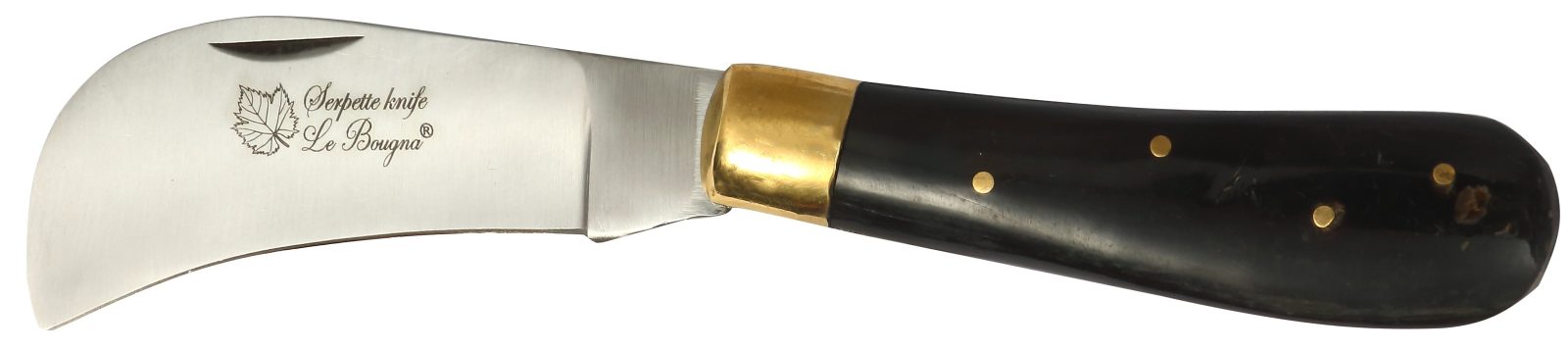
Black Horn Handle Pruning Knife with Round Brass Bolster – 8.5 cm Blade, 10 cm Handle

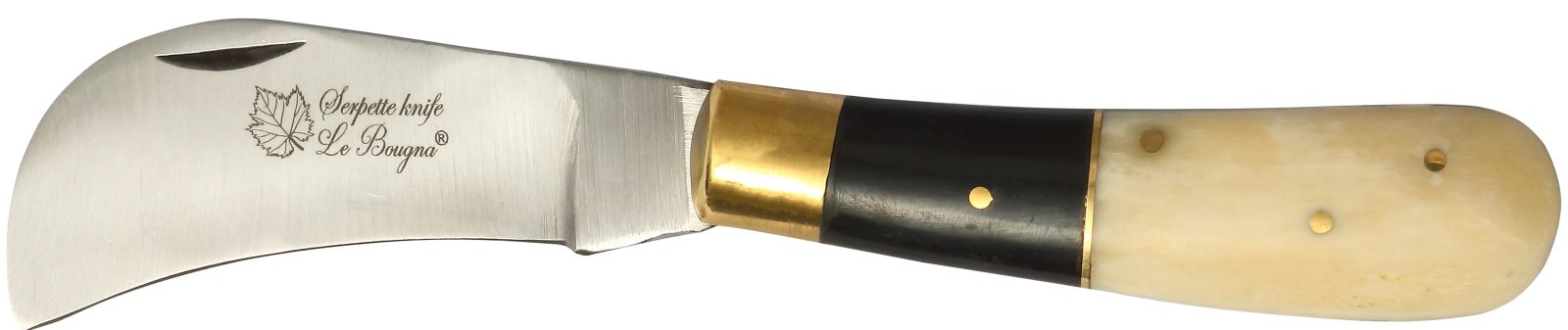
This serpette pruning knife has a hawksbill blade and glossy black horn handle, brass bolster, made in Pakistan.

$4.60
Unit price. Rates are degressive by quantity, size and material.
Wholesale $3.22
Ask about this item on WhatsApp
  • Factory direct Sialkot, since 1982
  • Worldwide shipping
  • Private label on request
  • Wholesale pricing by quantity

About this knife

This serpette pruning knife features an 8.5 cm curved hawksbill blade and a 10 cm glossy black horn handle with a polished brass bolster. Manufactured in Pakistan, its dark, polished finish offers a classic material option in the pruning knife range. A wholesale item for retailers targeting vineyard and gardening customers wanting a horn-handle option.

Specifications

Weight
0.098 kg
Blade size (cm)
8.5
Handle size (cm)
10
Blade
Stainless steel
Handle
Horn
Bolster
Brass
Knife Notes

Know-how from our Sialkot workshop

Made in Sialkot

From raw horn to a glossy black handle

Horn for knife handles is a by-product of the livestock trade. The raw horn is cleaned, warmed until it softens, then pressed flat or shaped and cut into handle blanks. Once fitted, it is sanded through progressively finer grits and buffed on a polishing wheel until it takes the deep gloss seen on this 10 cm handle.

The round brass bolster is brought up in the same polishing stage, and horn and brass have long been paired on Sialkot knives because both respond so well to the buffing wheel. On a hooked blade knife gripped hard for every pulling cut, the result is a smooth, warm handle, and since horn varies in shade and texture, no two are quite alike.
The story

Before secateurs, the knife did all the pruning

For most of history, vines, roses and fruit trees were pruned with a knife. Secateurs, the scissor-like shears now found in every garden shed, only appeared in the early nineteenth century; their invention is usually credited to Bertrand de Molleville, a former French minister, around 1815. They spread quickly, but they did not win everyone over.

Many professional growers kept their curved knives for decades afterwards, arguing that a sharp blade drawn through the wood leaves a cleaner wound than two jaws pinching it. That debate still runs among gardeners today, and it is why a working tool like this 8.5 cm horn-handled pruner is still made and sold alongside the shears.

Did you know?

Horn is closer to a fingernail than to bone

Cattle and buffalo horn is made of keratin, the same tough protein found in hair, hooves and fingernails, wrapped around a bony core that is removed before the horn is worked. That is why horn can be softened with heat and pressed into shape, something impossible with bone or antler. It also explains the warm, slightly flexible feel of the black handle on this stainless steel Pakistan knife, and why it should never be left on a hot radiator.

Questions & answers

Weight, finish and price of the horn pruner

How good is the quality of a Pakistan knife like this one?

Look at three things: the polish of the horn, the fit of the round brass bolster, and how the 8.5 cm stainless blade closes into the handle. On a well-made piece the gloss is even, the bolster sits tight with no gap, and the edge lands centred without touching the horn. Those points are worth checking on any knife you buy, from any country.

What is the folding knife price in Pakistan for this horn model?

Like all the knives for sale in Pakistan on this site, it is priced per piece in rupees (PKR) at the top of the page, and you can order through WhatsApp. Shops buying several get a lower rate per knife; tell us the quantity by email or WhatsApp.

How heavy is it?

About 98 g in total, so it does not drag a pocket down, yet the horn and the round brass bolster give it a solid, reassuring feel in the hand.