About this knife

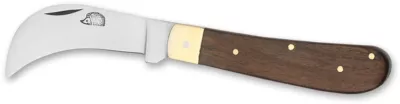
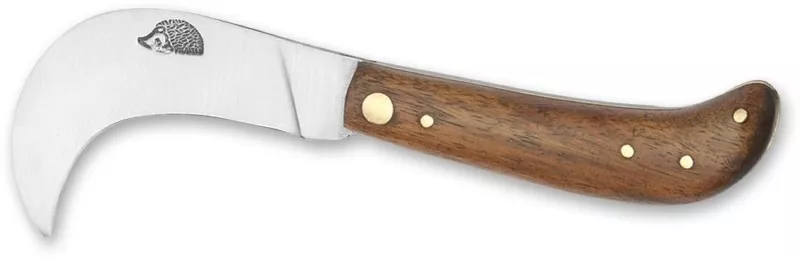
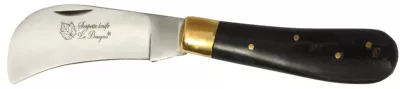
This serpette pruning knife pairs a 7.5 cm curved hawksbill blade with an 8.5 cm brown wood handle, built without a separate bolster for a simple, streamlined shape. Manufactured in Pakistan, its hooked edge suits vine pruning and grafting work. A wholesale item for retailers targeting an affordable pruning knife option.

Specifications

Manufacturer
Pakistan Knives Factory, Sialkot, Pakistan
Weight
0.077 kg
Blade size (cm)
7.5
Handle size (cm)
8.5
Blade
Stainless steel
Handle
Dark wood
Knife Notes

Know-how from our Sialkot workshop

Did you know?

Vines bleed if you prune them too late

Prune a grapevine as its buds swell in spring and the cuts can drip clear sap for days, sometimes in a steady trickle. Growers call this bleeding. It looks alarming but usually does the plant little harm, and it is one reason winter, while the vine is dormant, remains the preferred time for the main pruning. A light, pocketable hooked blade knife like this 7.5 cm model makes it easy to keep on top of the job before the sap starts to rise.
Questions & answers

Entry-level serpette: what buyers want to know

What does this stainless pruning knife cost in Pakistan?

US$4.00 per piece (PKR 1,620 for buyers in Pakistan). From 50 pieces the price drops to US$2.80 per piece. For a larger order, send us the quantity on WhatsApp or by email and we will quote a lower rate.

Why is there no bolster?

Leaving out the metal collar keeps the knife lighter, simpler and cheaper to make, and the wood runs right up to the blade. For occasional garden pruning it makes little practical difference; a bolster mainly adds weight, reinforcement and a decorative finish.

Which one to choose

Three close relatives worth weighing up

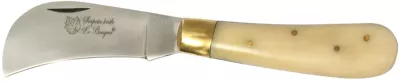
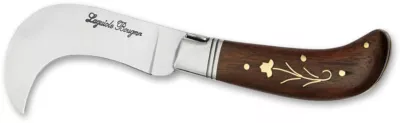
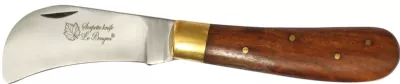
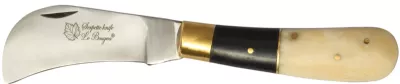
This is the brown wood, no-frills option among the compact pruners. If a customer wants something slightly different, point them to:

Sharpening

Homemade sharpener for the inside of the hook

No curved stone at hand? A homemade sharpener reaches into a hook just as well:

  1. Wrap a strip of wet-and-dry abrasive paper, 400 grit to start, around a wooden dowel or broom handle about as thick as your thumb.
  2. Hold the knife open and steady, and stroke the dowel along the bevel at roughly 20 degrees, following the curve of the 7.5 cm blade.
  3. Change to 1000 grit paper once a burr forms, and lighten your strokes.
  4. Flip the blade and remove the burr with two or three gentle passes.

For a stainless Pakistan folding knife of this size, that cheap kit can live in a shed drawer and does the job in minutes.