
Oyster Knives Ref. 3682

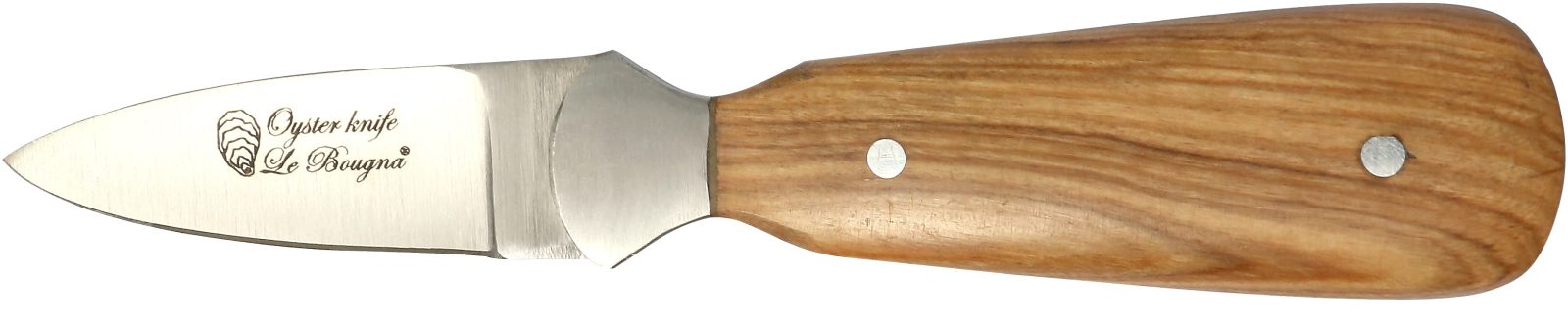
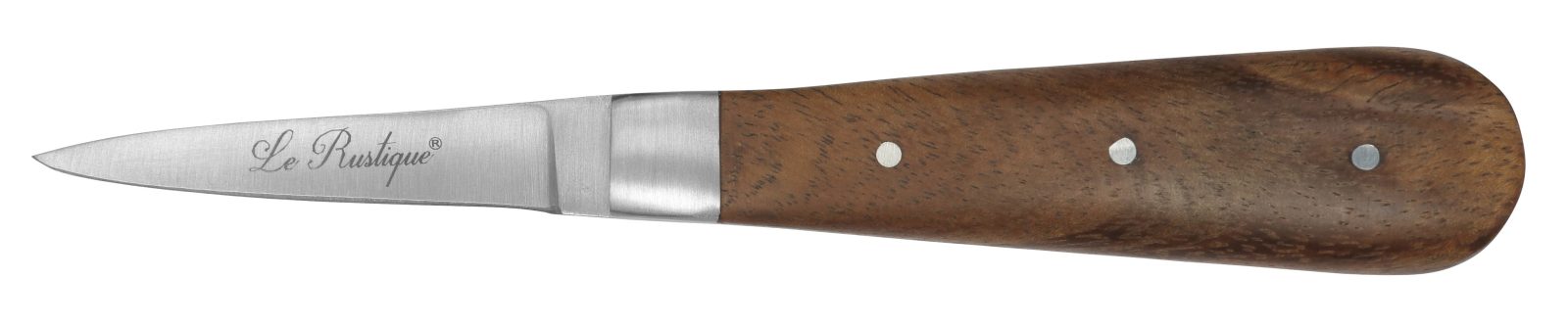
Dark Wood Handle Fixed-Blade Oyster Knife – 11 cm Handle, 21.5 cm Total Length

This fixed-blade oyster knife has a 10.5 cm blade and dark wood handle, 21.5 cm total length, made in Pakistan.

$3.60
Unit price. Rates are degressive by quantity, size and material.
Wholesale $2.52
Ask about this item on WhatsApp
  • Factory direct Sialkot, since 1982
  • Worldwide shipping
  • Private label on request
  • Wholesale pricing by quantity

About this knife

This oyster knife pairs a 10.5 cm stainless steel blade with an 11 cm dark wood handle, for a longer 21.5 cm overall length than the compact shucking knives in the range. Manufactured in Pakistan, its larger size suits opening bigger shells or working through a high volume. A wholesale item for retailers targeting seafood restaurants and oyster bar customers.

Specifications

Weight
0.155 kg
Blade size (cm)
10.5
Handle size (cm)
11
Blade
Stainless steel
Handle
Dark wood
Total length (cm)
21.5
Knife Notes

Know-how from our Sialkot workshop

Questions & answers

Big-shell shucker: questions from restaurants

Are Pakistan knives any good?

Judge each knife on its specification and finish rather than its origin. Here the blade is stainless, 10.5 cm long and fixed, with no folding joint to trap brine, and the dark wood handle is 11 cm long for a full-hand grip. Sialkot has exported cutlery for generations; on arrival, check that the blade sits straight and firm in the handle.

What is the price of this stainless oyster knife?

The price per knife is shown at the top of this page, in rupees (PKR) for visitors in Pakistan. Restaurants and oyster bars usually buy several at once, and the unit rate falls with quantity; message us on WhatsApp or by email for a quote.

Which oysters is it best for?

Large, deep-cupped shells and long sessions. The 21.5 cm overall length gives more leverage and reach than the compact knives in the range, which helps with big rock oysters and when working through a full tray before service. For small, delicate oysters, a shorter knife gives finer control.


How to use

Large oysters, long blade: letting leverage work

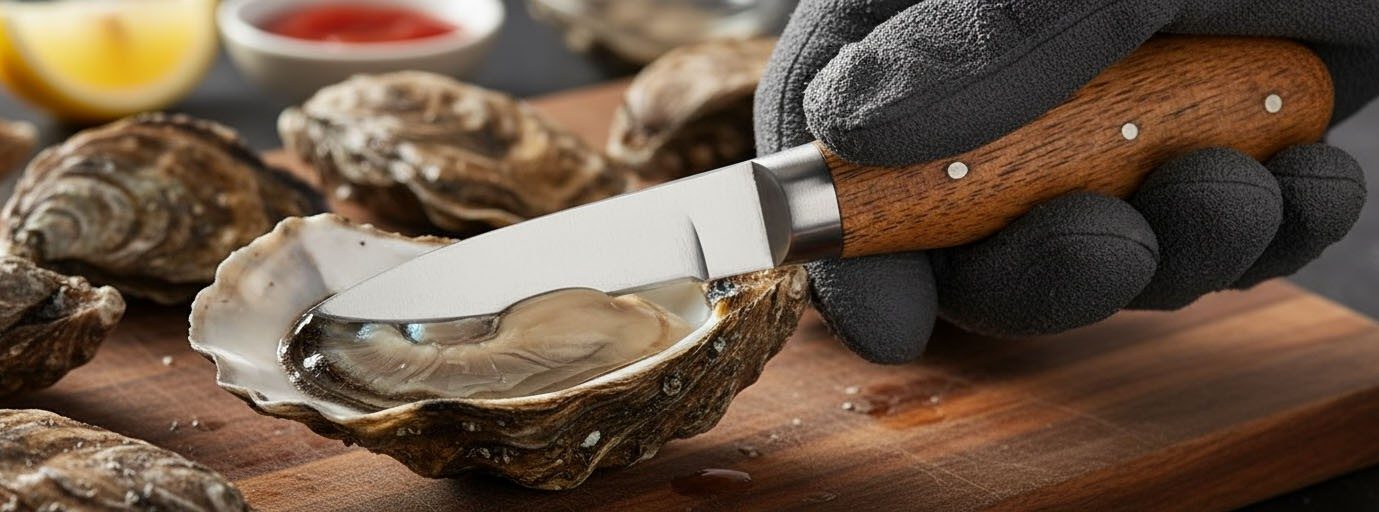
A long oyster knife changes the technique slightly: leverage does the work your wrist would otherwise do.

  1. Scrub the shells under cold water, then fold a thick towel over your holding hand or wear a cut-resistant glove.
  2. Lay the oyster flat side up on a board, pinned firmly in the towel.
  3. Work the tip of the 10.5 cm blade into the hinge with a gentle rocking motion until it holds, then lever the dark wood handle down to pop the shell.
  4. Slide the blade flat along the inside of the top shell to cut the muscle, lift the lid away, then pass it under the meat to free it, keeping the juice in the cup.
  5. Pick out any shell fragments and serve on ice.
Care & maintenance

After salt water: caring for dark wood and steel

The blade is stainless, but a stainless Pakistan knife is only as durable as the care given to its handle, and brine is hard on wood.

  • Rinse the knife under warm running water as soon as you finish, then wash it by hand with mild detergent; never leave it soaking in the sink.
  • Dry the blade and the dark wood handle straight away, paying attention to where the steel enters the wood.
  • Every few weeks, rub a little food-safe mineral oil into the 11 cm handle so it does not dry out and crack.
  • Keep it out of the dishwasher: heat and detergent raise the grain and can loosen the fit.
  • Store it in a blade guard or a knife roll to protect the tip of the 10.5 cm blade.
The story

Penny oysters and the long shucking knife

For much of the nineteenth century oysters were everyday food, not a luxury. In The Pickwick Papers, Dickens has Sam Weller observe that poverty and oysters always seem to go together, and New York's oyster cellars sold them cheaply by the plate. Overharvesting and pollution later emptied many natural beds, and oysters became the treat they are today.

Most oysters now come from farms, and kitchens that open hundreds in a shift rely on long, stiff knives with handles that fill the hand. Restaurants buying from wholesale knife suppliers still ask for exactly this pattern: a 21.5 cm fixed-blade knife with a stainless blade and a dark wood handle.