Pruning Knives Ref. 3605

Olive Wood Handle Pruning Knife – 10 cm Handle

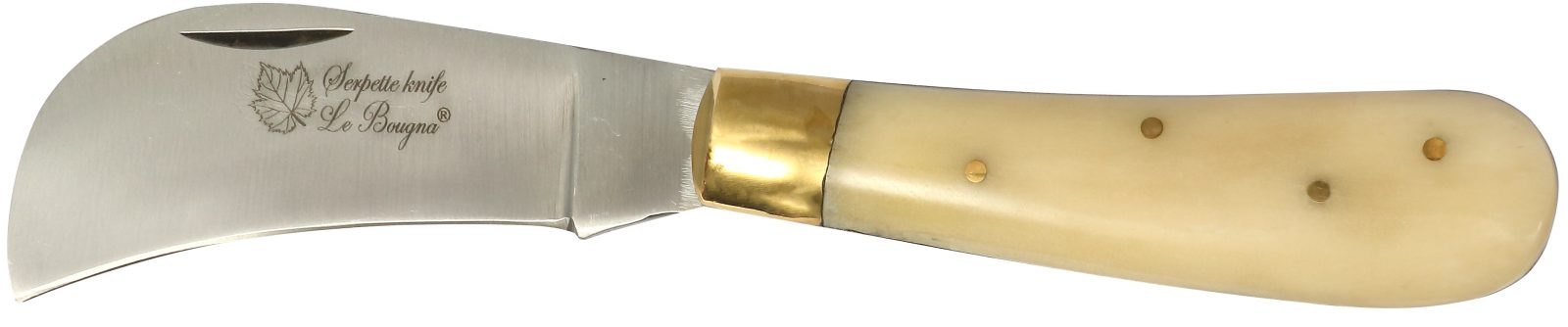
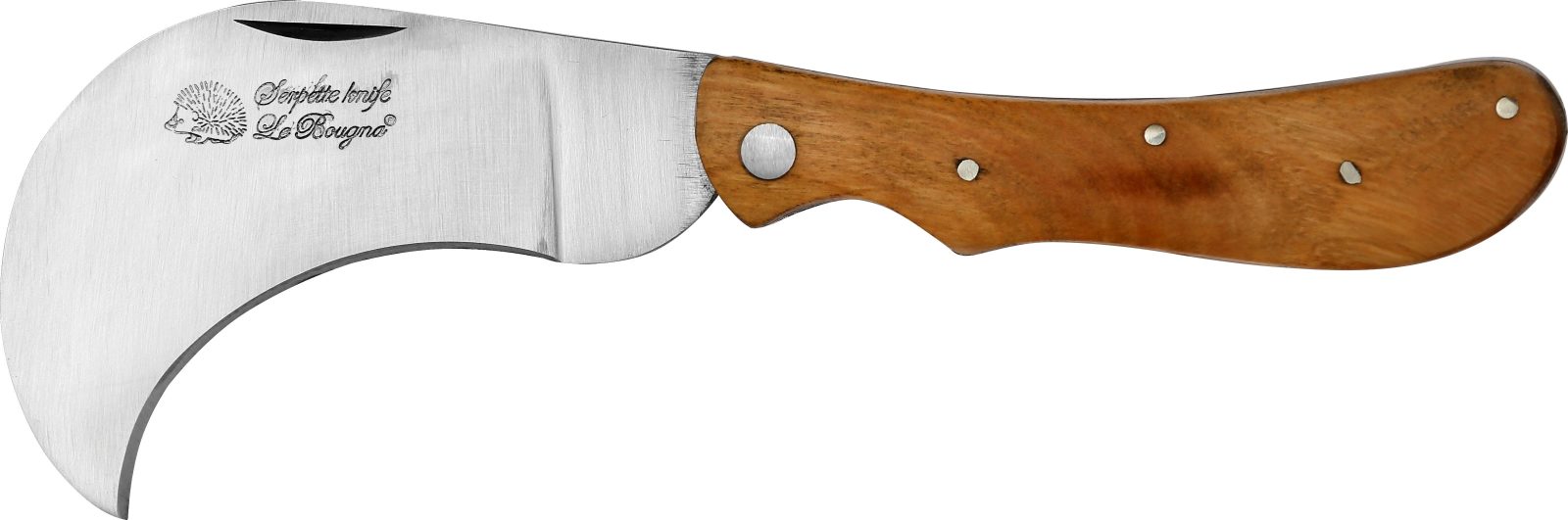
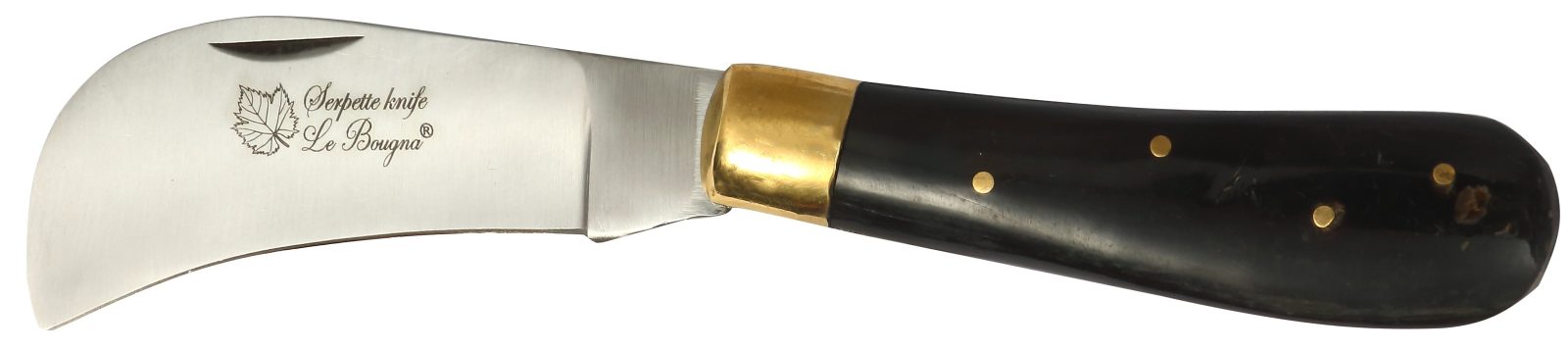
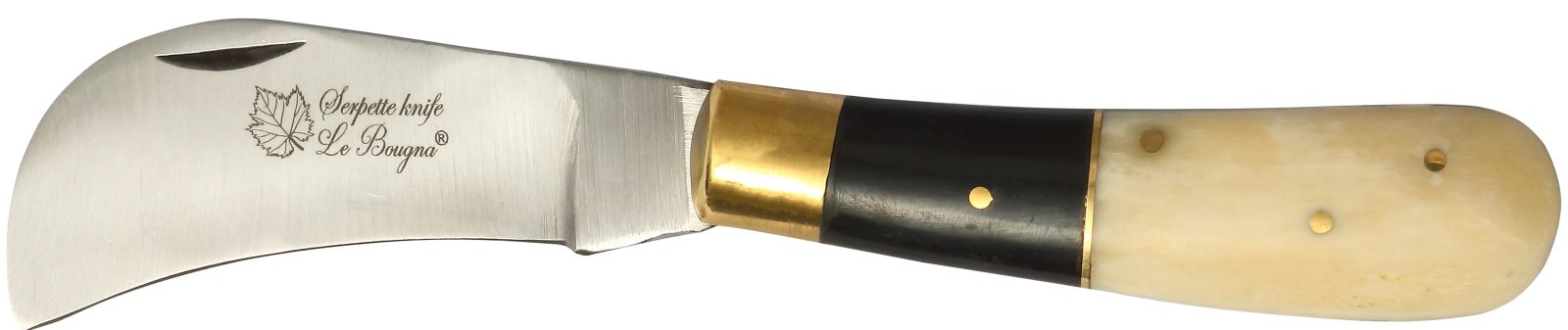
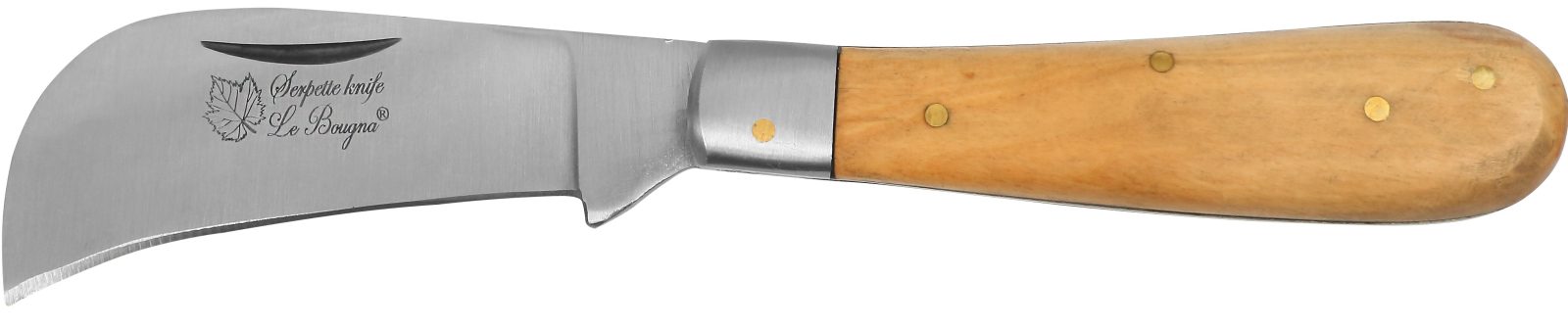
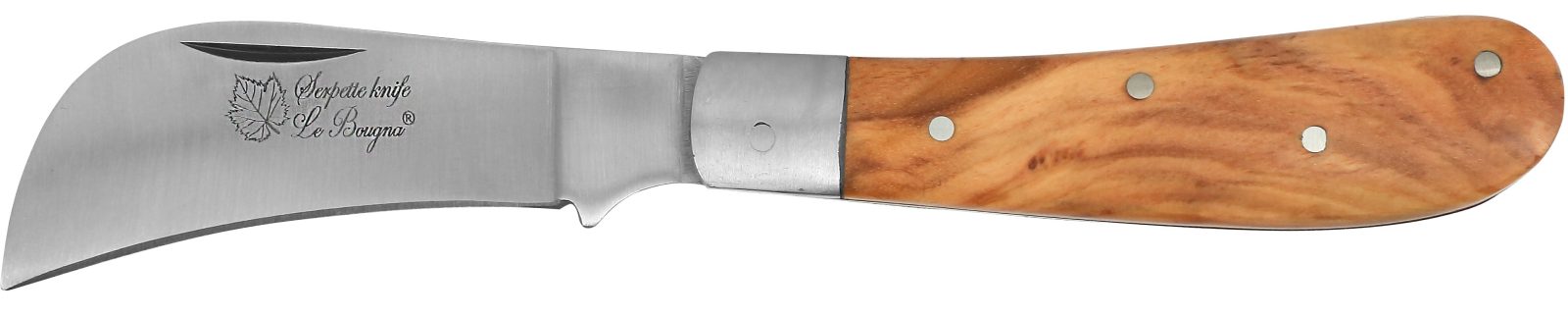
This serpette pruning knife has a hawksbill blade and olive wood handle, inox bolster, made in Pakistan.

$3.25
Unit price. Rates are degressive by quantity, size and material.
Wholesale $2.28
Ask about this item on WhatsApp
  • Factory direct Sialkot, since 1982
  • Worldwide shipping
  • Private label on request
  • Wholesale pricing by quantity

About this knife

This serpette pruning knife pairs an 8.5 cm curved hawksbill blade with a 10 cm olive wood handle and a polished inox bolster, its swirled grain giving each handle a unique look. Manufactured in Pakistan, it's built for genuine vine pruning and grafting work. A wholesale item for retailers targeting vineyard and orchard customers wanting a premium wood option.

Specifications

Weight
0.108 kg
Blade size (cm)
8.5
Handle size (cm)
10
Handle
Teak wood
Bolster
Inox
Knife Notes

Know-how from our Sialkot workshop

Questions & answers

Grain, finish and price: olive serpette questions

Are Pakistan knives any good?

Well-made ones certainly are, and a pruning knife is quick to assess. Look for a crisp hook point, a polished inox bolster that sits tight against the olive wood, and a blade that opens with steady resistance instead of flopping. Sialkot's makers have turned out folding garden knives for a long time, and among Pakistani knives the serpette is a pattern they know well.

What is the folding knife price in Pakistan for the olive version?

Its price for a single piece appears in rupees (PKR) at the top of this page for visitors in Pakistan. Wholesale buyers pay less as quantities grow; ask for a quote by WhatsApp or email and tell us whether you also want the other woods in the range.

Will my handle look like the one in the photo?

Only broadly. Olive wood has a swirled, irregular grain, so every handle carries its own pattern of dark streaks and lighter patches. The photo shows a typical 10 cm handle; yours will match it in colour and differ in detail.
The story

Olive groves and the knife that shapes them

Olive trees have been pruned by hand around the Mediterranean for thousands of years, and growers there still repeat an old saying: a well-pruned olive should be open enough for a bird to fly through its centre. Opening the crown lets light and air reach the fruiting wood, and much of that work, on suckers, water shoots and small branches, has traditionally been done with a short curved knife.

It is fitting, then, that this serpette knife carries a handle of olive wood. The dense, swirling grain of the 10 cm handle comes from the very tree the knife was designed to tend, while the 8.5 cm hawksbill blade and inox bolster keep it a working tool rather than an ornament.

Quality check

Reading olive grain and fit on delivery

Olive is a handsome but lively wood, so look at the handle as closely as the blade:

  • Small dark knots and swirls are natural; a crack running along the grain is not.
  • The finish is even over the whole 10 cm handle, with no dry, chalky patches.
  • The inox bolster and the wood meet without a step or a gap.
  • The 8.5 cm blade opens with steady tension and closes centred.

Shops selling this Pakistan folding knife can turn the grain into a selling point by letting customers pick their favourite handle from a tray.

How to use

Clearing suckers and water shoots from olive and fruit trees

Suckers rising from the roots and upright water shoots on the branches draw energy away from fruiting wood. The curve of this blade deals with both:

  1. Clear soil or grass from the base so you can see exactly where the sucker leaves the root or trunk.
  2. Hook the 8.5 cm blade around the shoot as low as possible, right at its point of origin.
  3. Pull the knife towards you in one firm stroke, keeping your other hand well behind the line of the cut.
  4. On branches, take water shoots off close to the bark without tearing into the collar at their base.
  5. Wipe the blade and fold it away before moving to the next tree.