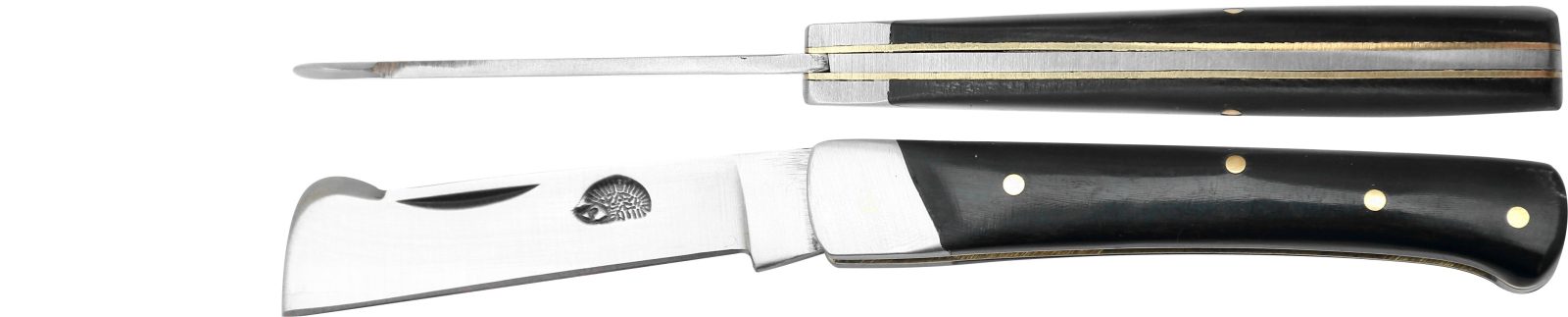
Grafting Knives Ref. 3634

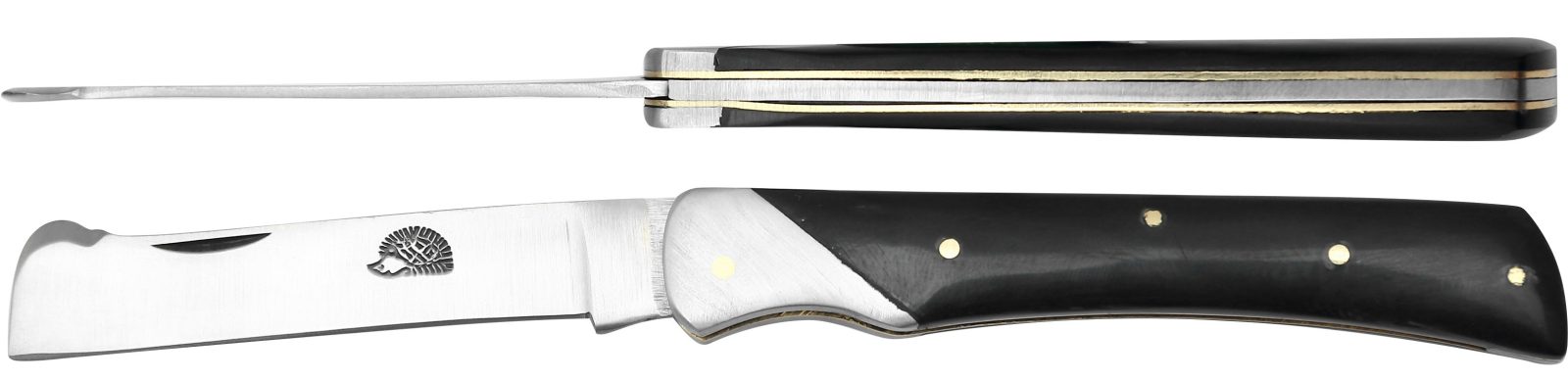
Black Horn Handle Grafting Knife with Bark Lifter – 8 cm Handle, Inox Bolster

This grafting knife has a curved blade plus a bark lifter, black horn handle, inox bolster, made in Pakistan.

$4.50
Unit price. Rates are degressive by quantity, size and material.
Wholesale $3.15
Ask about this item on WhatsApp
  • Factory direct Sialkot, since 1982
  • Worldwide shipping
  • Private label on request
  • Wholesale pricing by quantity

About this knife

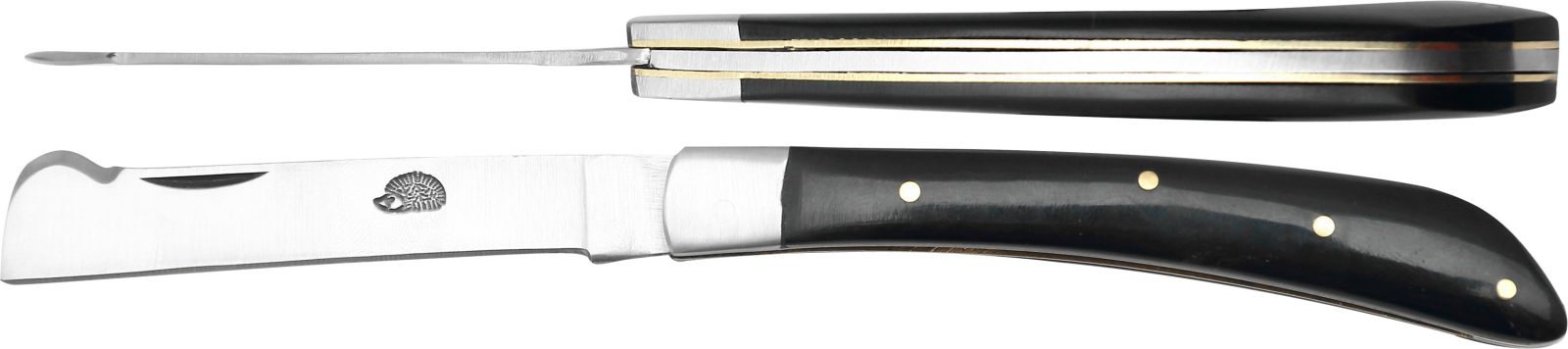
This grafting knife pairs a 5.5 cm curved hawksbill blade with a second thin, flat bark-lifting tool, both folding into an 8 cm black horn handle with a polished inox bolster. Manufactured in Pakistan, the bark lifter helps peel back bark cleanly during grafting work. A wholesale item for retailers targeting serious grafting and orchard customers.

Specifications

Weight
0.043 kg
Blade size (cm)
5.5
Handle size (cm)
8
Blade
Stainless steel
Handle
Horn
Bolster
Inox
Knife Notes

Know-how from our Sialkot workshop

Display & retail

Selling a compact two-tool knife at grafting time

Grafting season sells this knife. From late winter, when customers come in for rootstocks, grafting tape and wax, put this compact grafting knife right beside them rather than in the general knife cabinet.

  • Show one sample open with both tools out: the 5.5 cm hawksbill blade and the flat bark lifter explain themselves better than any label.
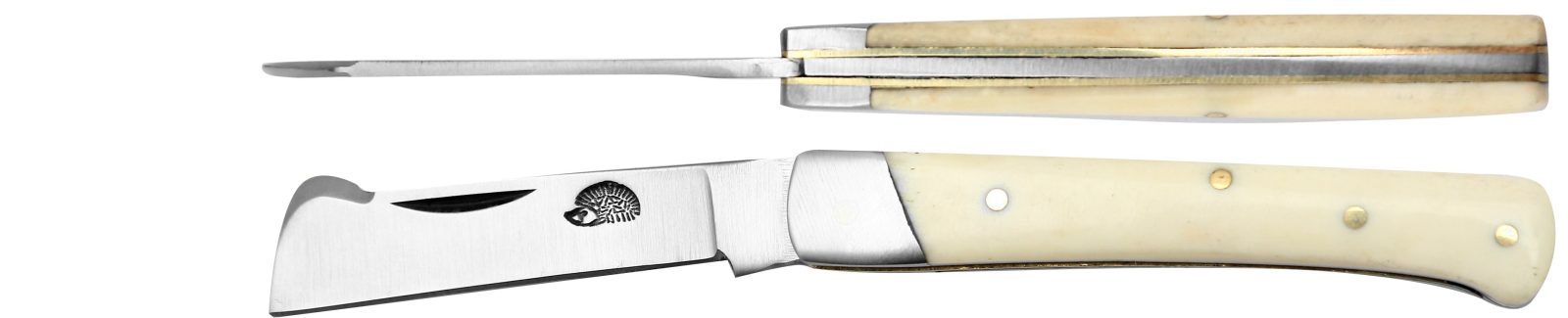
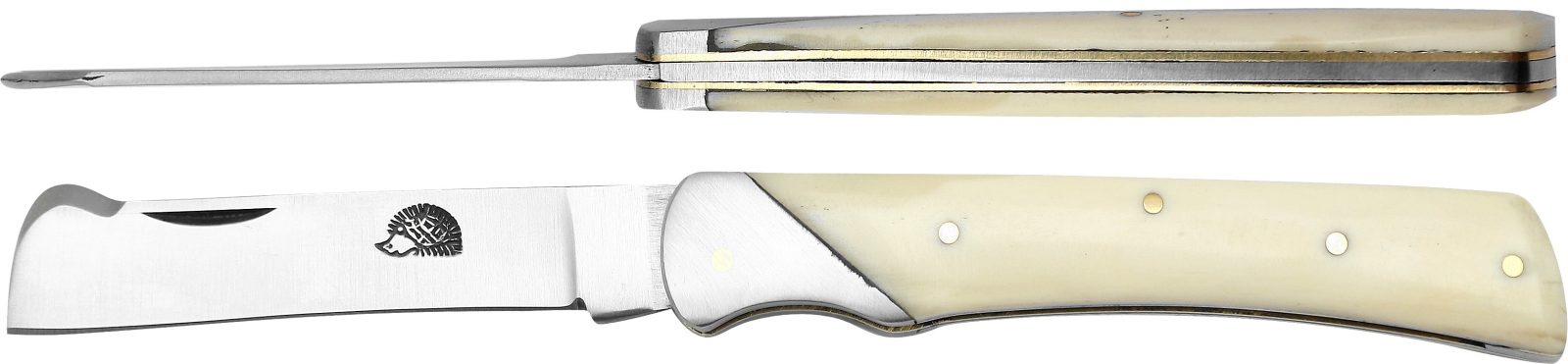
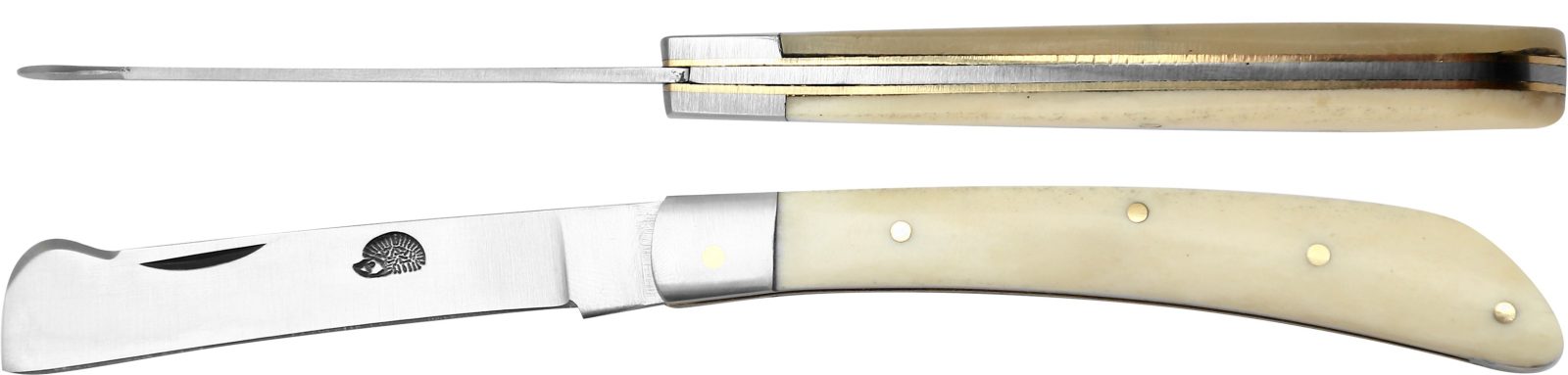
  • Group it with its white bone twin in the same 8 cm size, so customers choose by handle colour, not by function.
  • Bring it back to the counter in early summer, when rose and fruit growers start budding.
  • Suggest a leather sheath and a pocket sharpener as add-ons at the till.
How to use

T-budding with the hawksbill and the bark lifter

Shield budding, or T-budding, is done in summer while the bark lifts easily from the wood. The two tools on this knife share the work:

  1. On the rootstock, a hand's width above the soil, cut a short horizontal line through the bark, then a vertical cut down from its centre to form a T.
  2. Ease the two flaps open with the flat bark lifter, taking care not to tear them.
  3. With the curved 5.5 cm blade, slice a shield-shaped sliver holding one bud from the budwood, starting below the bud and drawing up behind it.
  4. Slide the shield down under the flaps until it sits snugly, then bind it with budding tape, leaving the bud itself uncovered.

A few weeks later, a plump bud whose leaf stalk drops off at a touch shows the Pakistan knife has done its part.

Questions & answers

Your questions on the compact horn knife

Does Pakistan make good knives?

Yes, and Sialkot in particular has built its name on tools that work for a living: surgical instruments, cutlery and garden knives. This one is a fair example, with a stainless hawksbill blade, a separate bark lifter, black horn scales and an inox bolster, all folding into an 8 cm handle that weighs about 43 g. Open both tools on arrival; each should swing out smoothly and close cleanly.

What is the price of this grafting knife in Pakistan?

Look at the top of this page: shoppers in Pakistan see a per-piece price in rupees (PKR). Orchard suppliers and garden centres buying in quantity get a lower rate per knife, so message us on WhatsApp or email with the number you need.

What exactly is the bark lifter for?

It is the thin, flat second tool. Grafters use it to ease bark away from the wood without cutting it, whether opening the flaps of a T-bud or making room for a scion under the bark. Keeping it separate means the cutting edge is never dulled by prying.

Sharpening

Honing the inside curve of a hawksbill

A hawksbill edge curves inwards, so a flat stone only touches it at the ends. Work it with something round instead:

  1. Colour the edge bevel with a marker pen; the ink shows exactly where you are removing metal.
  2. Hold a tapered ceramic or diamond rod still and draw the curved 5.5 cm edge along it, from the bolster towards the point, matching the existing bevel angle.
  3. Roll the blade as you go so the rod follows the curve; when the ink disappears evenly, the angle is right.
  4. Raise a fine burr, then remove it with a few alternating light strokes and a pass on leather.

Leave the bark lifter blunt, since it should part bark, not cut it. A Pakistan stainless steel knife looked after this way rarely needs more than a short session each season.