Grafting Knives Ref. 3721

Damascus Blade Grafting Knife with Teak Wood Handle – 10 cm Handle, Scalloped Inox Bolster

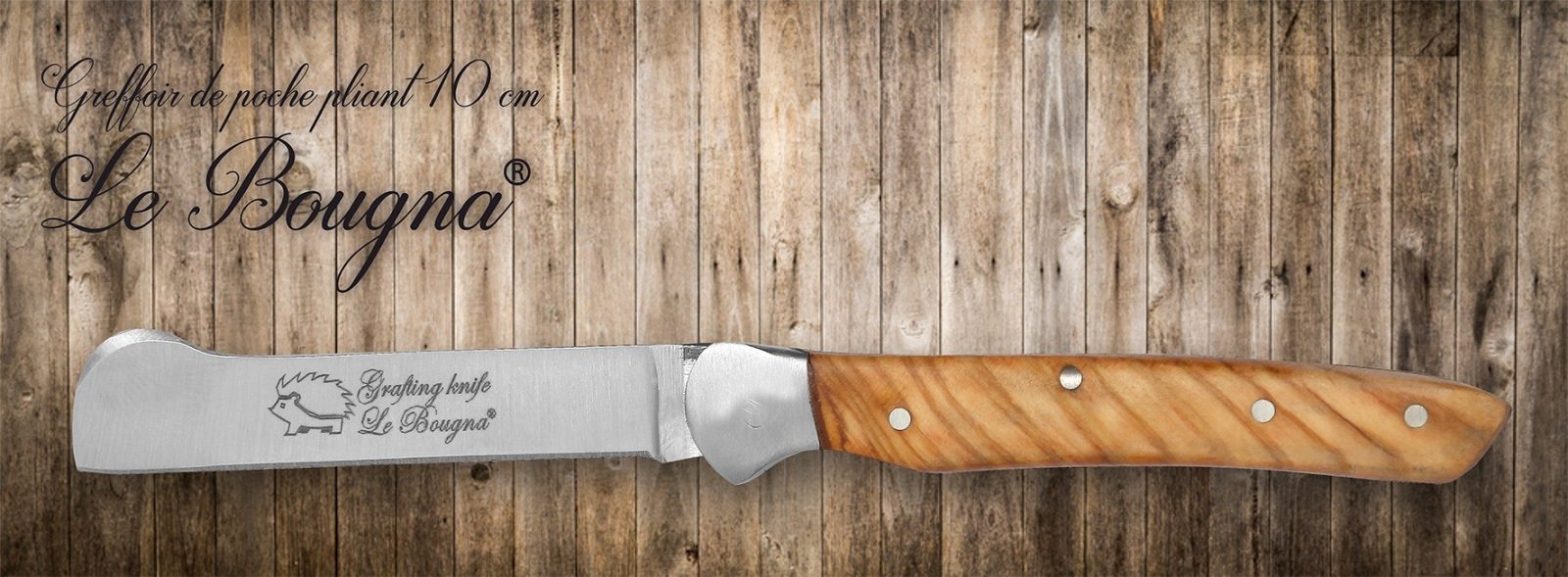
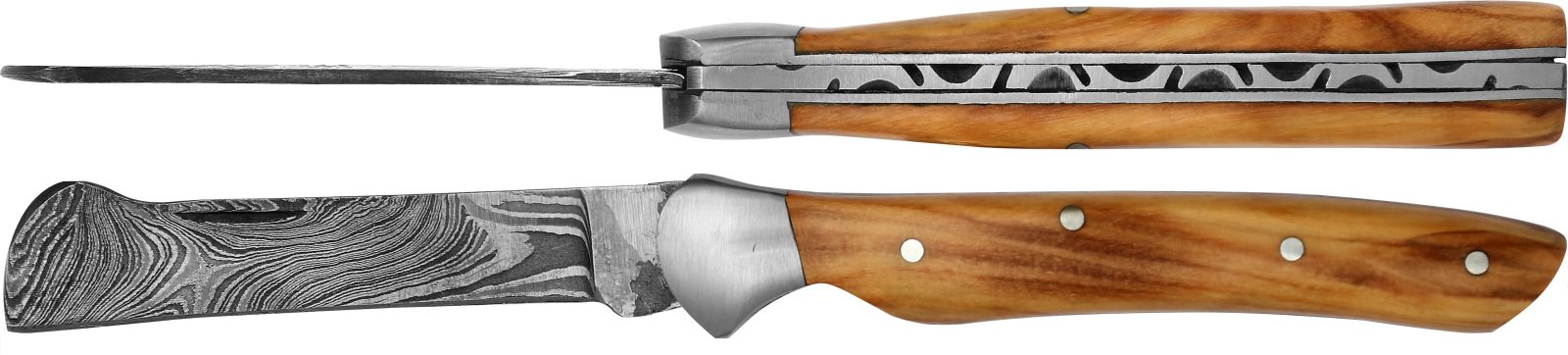
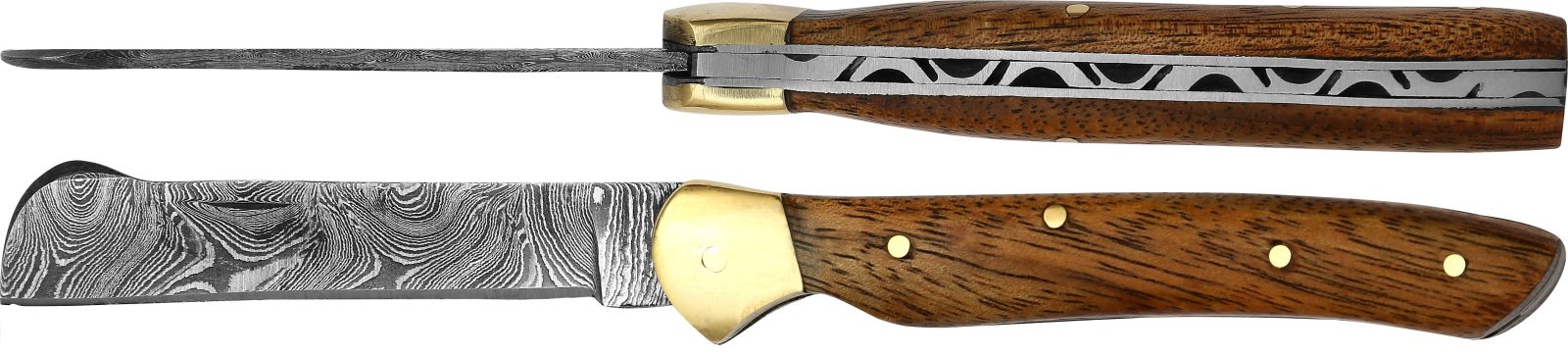
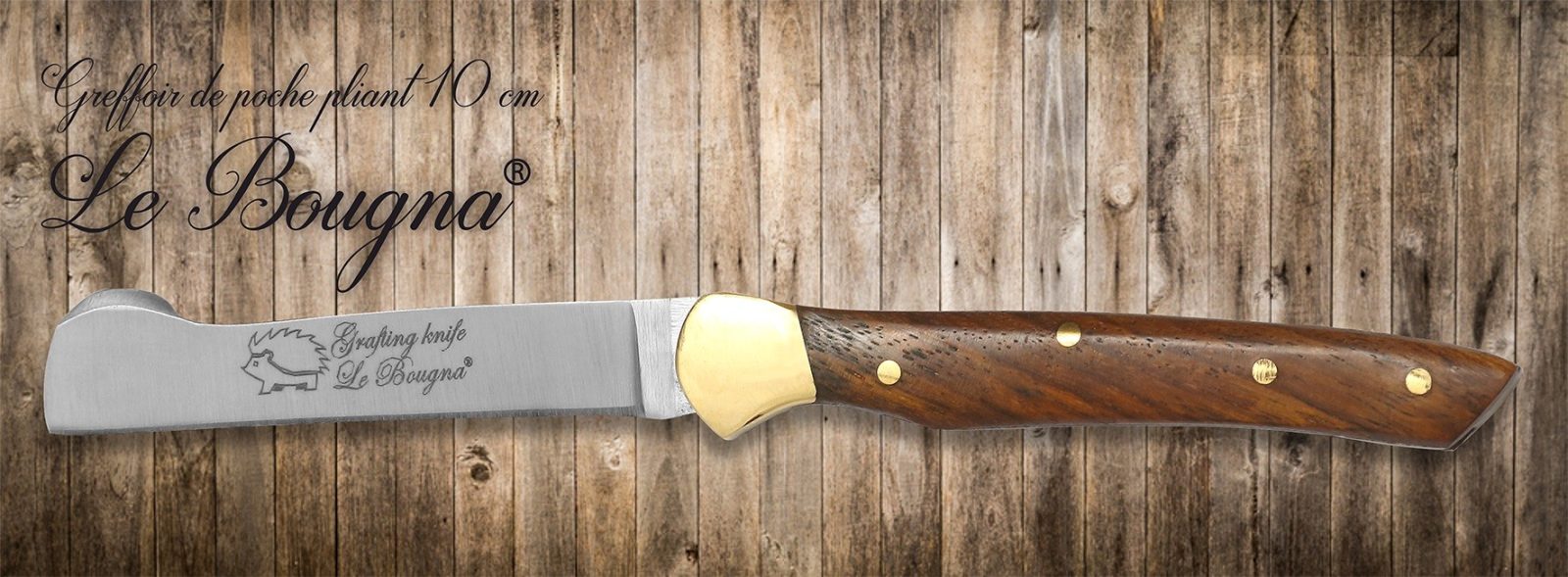
This Damascus grafting knife has a scalloped inox bolster and teak wood handle, made in Pakistan.

$9.85
Unit price. Rates are degressive by quantity, size and material.
Wholesale $6.90
Ask about this item on WhatsApp
  • Factory direct Sialkot, since 1982
  • Worldwide shipping
  • Private label on request
  • Wholesale pricing by quantity

About this knife

This grafting knife pairs an 8.5 cm hand-forged Damascus steel blade with a 10 cm teak wood handle and a scalloped-edge inox bolster. Manufactured in Pakistan, the decorative bolster detail sets it apart from the plain-bolster Damascus grafting knives in the range. A wholesale item for retailers targeting collectors and premium orchard customers.

Specifications

Weight
0.066 kg
Blade size (cm)
8.5
Handle size (cm)
10
Blade
Damascus steel
Handle
Teak wood
Bolster
Inox
Knife Notes

Know-how from our Sialkot workshop

Questions & answers

Scalloped bolster, teak and Damascus: common questions

Are Damascus knives from Pakistan any good?

Pakistan is one of the main sources of Damascus knives today, and quality varies, so look at the blade itself. Here the 8.5 cm blade is hand-forged from layered steel and etched to reveal its pattern, which should run evenly right to the edge, free of cracks or blotches. With a teak handle and a scalloped inox bolster finished to match, it is a sound Pakistan folding knife for grafting or for a collection.

How much does this Damascus grafting knife cost in Pakistan?

Visitors in Pakistan will find the price in rupees (PKR) at the top of the page, for one knife, and can buy through WhatsApp. If you are stocking a gift shop or a collectors' counter, ask us for a wholesale rate: the per-piece price falls with quantity, and we reply by WhatsApp or email.

What does the scalloped bolster add?

It is a decorative touch: a wavy edge where the inox bolster meets the teak, which sets this knife apart from the plain-bolstered Damascus model. It is also where your fingers rest, so check that the scallops feel smooth when the knife arrives.
Care & maintenance

A care routine for teak, inox and layered steel

The three materials on this knife ask for different amounts of attention. The inox bolster needs almost nothing, teak is naturally oily and tolerant of damp, and the Damascus blade needs the most care.

  • After grafting, clean sap from the blade at once with a damp cloth, dry it completely and leave a thin coat of oil before folding.
  • If faint rust spots appear, lift them with oil and a soft cloth rather than an abrasive pad, which would blur the etched pattern.
  • Oil the teak lightly once or twice a season to keep its colour warm.
  • Store the knife closed in a dry drawer, never in a damp shed over winter.

The same routine suits all our Pakistan Damascus knives, whatever the handle.

Did you know?

Why the name Damascus at all

The name goes back to the celebrated blades traded through Damascus centuries ago. They were forged from wootz, a crucible steel made in South Asia whose bars carried a watery pattern, and the exact method was lost by the nineteenth century. Modern Damascus, like this 8.5 cm blade, is pattern-welded instead: layers of steel are forge-welded, folded and etched to bring out the figure.

Display & retail

Showing one knife to collectors and gardeners at once

This knife has two audiences, and the display should speak to both. Collectors look at the pattern and the scalloped bolster; gardeners want to know it will make a clean graft.

  • Place it open, at eye level, in a closed glass cabinet, with the blade angled towards the light so the layers show.
  • Keep the stainless grafting knives on the shelf below, so the step up in material is obvious.
  • A small card explaining that the pattern differs on every blade helps explain the price difference.
  • Bring it forward before the gift season as well as in spring: it is one of the few knives from Pakistan in our catalogue that pleases a gardener and a collector equally.

A leather sheath and a honing rod nearby make natural add-ons.