Grafting Knives Ref. 3720

Damascus Blade Grafting Knife with Acacia Wood Handle – 10 cm Handle, Brass Bolster

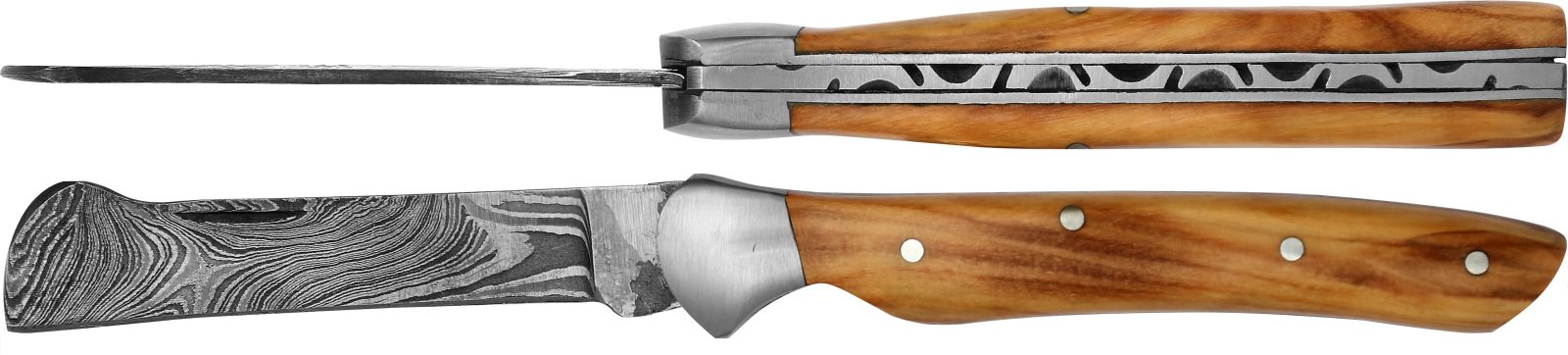
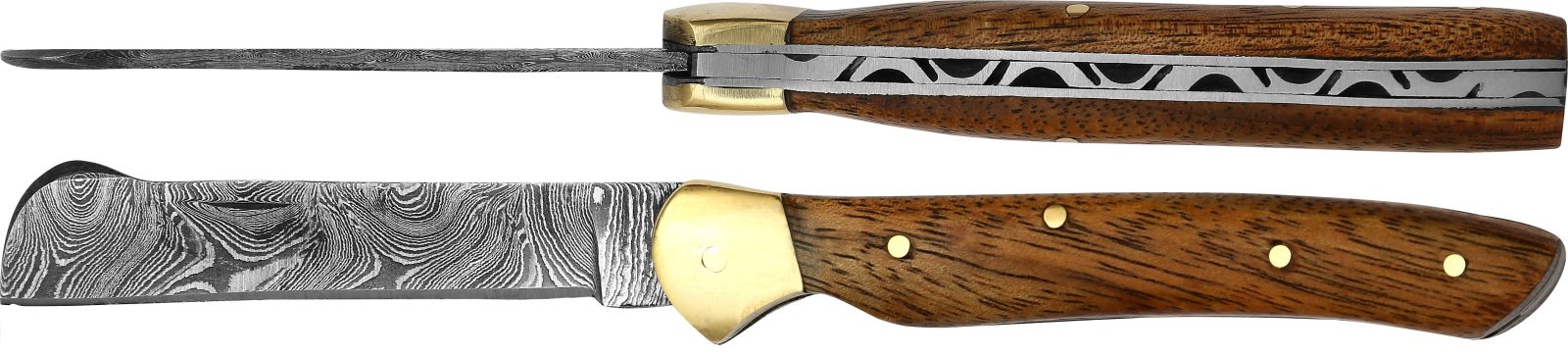
This Damascus grafting knife has a decoratively notched blade and acacia wood handle, brass bolster, made in Pakistan.

$9.85
Unit price. Rates are degressive by quantity, size and material.
Wholesale $6.90
Ask about this item on WhatsApp
  • Factory direct Sialkot, since 1982
  • Worldwide shipping
  • Private label on request
  • Wholesale pricing by quantity

About this knife

This grafting knife pairs an 8.5 cm hand-forged Damascus steel blade with a decoratively notched spine and a 10 cm acacia wood handle finished with a polished brass bolster. Manufactured in Pakistan, it's a premium alternative to the stainless steel grafting knives in the range. A wholesale item for retailers targeting collectors and premium orchard customers.

Specifications

Weight
0.066 kg
Blade size (cm)
8.5
Handle size (cm)
10
Blade
Damascus steel
Handle
Acacia wood
Bolster
Brass
Knife Notes

Know-how from our Sialkot workshop

Which one to choose

Damascus with acacia, or one of its stainless cousins

This Damascus folding knife sits at the top of the grafting range: an 8.5 cm hand-forged blade with a decoratively notched spine, set in a 10 cm acacia handle with a brass bolster. If you are weighing it against a close relative, these are the alternatives:

Care & maintenance

Keeping pattern-welded steel bright through a sappy season

Damascus is forge-welded from layers of different steels and then etched, and because it usually includes high-carbon layers it rusts more readily than the plain stainless blades in the range. Sap and fruit juice left to dry can also darken the pattern.

  • Wipe the blade clean and dry straight after each grafting session, then leave a thin film of mineral or camellia oil on it.
  • Never soak it or put it in a dishwasher: water also swells the acacia and works into the joint.
  • Rub a little oil or wax into the acacia handle a few times a year.
  • Let the brass bolster mellow or polish it, keeping metal polish off the etched blade, which it would scour.

Cared for like this, a Pakistan knife with a wood handle and a Damascus blade keeps its contrast for many years.

Pro tip

Rehearse every cut on willow prunings first

Before the Damascus blade touches precious scion wood, spend ten minutes practising on willow or poplar prunings, which are soft, cheap and plentiful in late winter. Cut until your sloping faces come out flat from a single stroke of the 8.5 cm edge, then press two of them together against the light: if no light shows through, your technique is ready for the real graft.

Questions & answers

Notched spine, Damascus steel and price: buyer answers

Are Damascus knives from Pakistan any good?

The well-made ones are, and Pakistan has a large Damascus knife trade. On a good pattern-welded blade like this 8.5 cm one, the layers run evenly to the edge, with no dull patches and no visible cracks between them. Paired with acacia and brass, it is a working Pakistan knife that also appeals to collectors; kept dry and oiled, it holds a keen edge for grafting.

What is the price of a Damascus knife like this in Pakistan?

For shoppers in Pakistan, the price is shown in rupees (PKR) at the top of this page and covers one knife. Collectors' shops and orchard suppliers ordering several pieces receive a lower rate per knife: write to us on WhatsApp or by email with the quantity, and we will send a wholesale quote.

Is the notched spine just decoration?

Mostly, yes. Filework of this kind is a traditional way to decorate the back of a folding blade, and here it echoes the rippled Damascus pattern. It also gives the thumb a little extra purchase when you press on the spine during a cut.