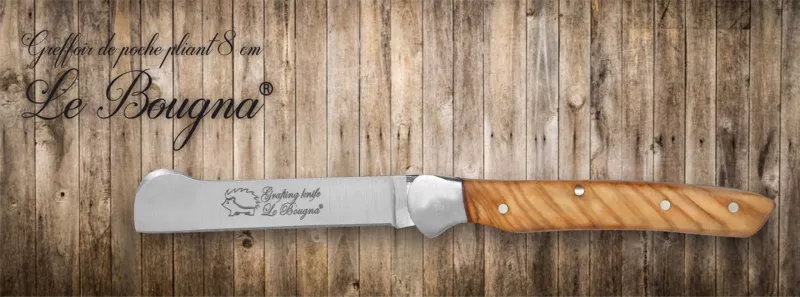
About this knife

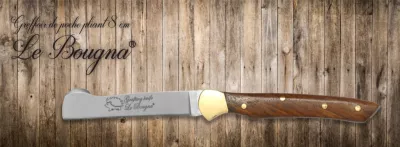
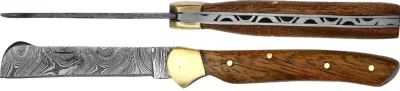
This grafting knife features a 6.5 cm flat, spatula-tipped blade and an 8 cm teak wood handle with a polished inox bolster, sized for compact pocket carry. Manufactured in Pakistan, its swirled grain offers a lighter-toned alternative to the reddish acacia version in the same size. A wholesale item for retailers wanting variety in compact grafting knives.

Specifications

Manufacturer
Pakistan Knives Factory, Sialkot, Pakistan
Weight
0.045 kg
Blade size (cm)
6.5
Handle size (cm)
8
Blade
Stainless steel
Handle
Teak wood
Bolster
Inox
Knife Notes

Know-how from our Sialkot workshop

Best uses

Budding-season jobs for a small teak-handled blade

Folded, this knife measures just 8 cm, and its 6.5 cm flat blade with a spatula tip is built for the close, delicate work of budding rather than heavy cuts. Teak wood feels warm and grippy on a cool morning, which matters on a grafting knife you may hold for an hour at a stretch.

  • T-budding roses in midsummer
  • Budding citrus onto seedling rootstocks
  • Cutting bud sticks to length
  • Lifting bark with the spatula tip
  • Trimming budding strips and tape
  • Taking softwood cuttings
Questions & answers

Teak wood, price and quality questions

What is the price of this grafting knife in Pakistan?

US$3.35 per piece (PKR 1,438 for buyers in Pakistan). From 50 pieces the price drops to US$2.35 per piece. For a larger order, send us the quantity on WhatsApp or by email and we will quote a lower rate.

Will every handle look like the photo?

Not exactly. Teak is a natural wood, so each 8 cm handle carries its own pattern of lighter and darker streaks. The shape, the inox bolster and the 6.5 cm blade are identical from knife to knife; only the figure of the wood changes, and many customers see that as part of the appeal.

Display & retail

Merchandising a lighter teak handle beside reddish acacia

Teak wood is noticeably lighter in tone than the reddish acacia used on the brass-bolstered version of this same 8 cm knife. Shown side by side on a small angled stand, the two invite customers to pick a favourite, and some will happily take one of each.

  • Bring the knives forward in late winter, when gardeners order rootstocks and plan their grafting, and again in early summer for budding.
  • Place them beside grafting tape, budding strips and secateurs, not in the general pocket-knife cabinet.
  • Leave one knife open so the flat, spatula-tipped blade explains its purpose.

A shelf card reading “teak wood, stainless blade, made in Sialkot” answers the first questions shoppers ask about Pakistan knives for sale in a garden centre.

How to use

T-budding a rose with the spatula tip

Summer budding needs a keen edge and a gentle lift, and this compact knife does both. Work when the bark is lifting easily, usually from early to late summer.

  1. On the rootstock, make a vertical cut through the bark only, then a short cross cut at its top, so the two form a T.
  2. Turn the knife and use the spatula tip to ease back both flaps of bark without tearing the green layer underneath.
  3. Cut a bud from a ripe shoot of the chosen variety with a shallow, shield-shaped slice of the 6.5 cm blade, in one smooth stroke.
  4. Slide the shield down into the T until it sits snugly under the flaps, then bind it firmly with a budding strip, leaving the bud itself uncovered.

Wipe the blade before folding it back into the teak wood handle.