About this knife

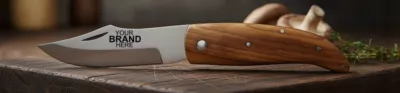
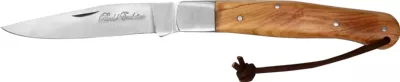
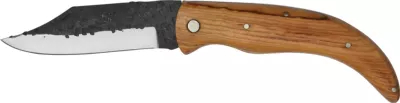
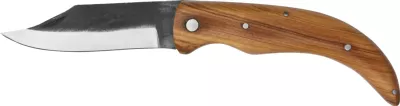
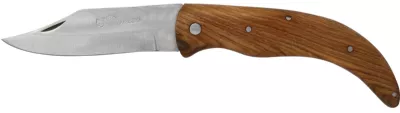
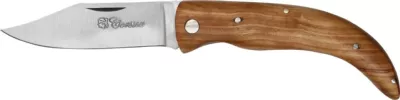
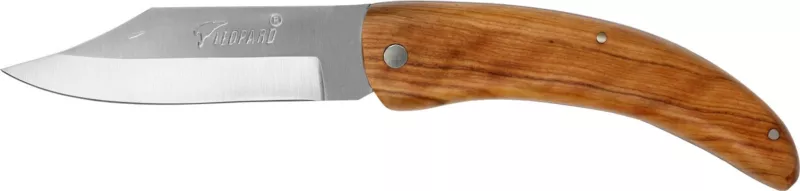
This folding knife pairs a 9.5 cm stainless steel blade with a 12 cm teak wood handle, its warm swirled grain left unbolstered for a clean, classic profile. Forged and finished in Pakistan, it's a dependable everyday-carry pocket knife with a traditional silhouette. Available to wholesale buyers as a steady, no-frills addition to a folding knife range.

Specifications

Manufacturer
Pakistan Knives Factory, Sialkot, Pakistan
Weight
0.151 kg
Blade size (cm)
9.5
Handle size (cm)
12
Blade
Stainless steel
Handle
Teak wood
Knife Notes

Know-how from our Sialkot workshop

Which one to choose

Classic teak folder or one of its cousins

With a 9.5 cm blade in a 12 cm teak wood handle and no bolster, this is the most traditional-looking Pakistan pocket knife in the teak group. If its proportions are not quite right, consider:

Questions & answers

Maker, price and grain of the teak folder

Is the price the same for one teak knife and for fifty?

US$5.00 per piece (PKR 1,900 for buyers in Pakistan). From 50 pieces the price drops to US$3.50 per piece. For a larger order, send us the quantity on WhatsApp or by email and we will quote a lower rate.

Does teak wood need special care?

Very little. Teak is dense and naturally oily, so it resists moisture well. Wipe it after use, avoid soaking, and every few months rub in a drop of food-safe oil to keep the swirled grain glowing.

Complete the set

Natural companions for a classic teak folder

An teak wood knife appeals to customers who value natural materials, and these add-ons follow the same idea:

A Pakistan stainless steel knife with this kind of support stays sharp, presentable and easy to give.

How to use

Whittling a tent peg with a 9.5 cm blade

Whittling is the best way to get to know a folding knife, and a tent peg makes a good first project:

  1. Choose a straight, dry stick about as thick as your thumb, and sit with your elbows on your knees so every cut goes away from your body.
  2. Open the blade fully and hold the teak handle in a firm, full grip.
  3. Carve the point with long, shallow strokes, turning the stick a little after each one.
  4. Cut a notch near the top for the guy line: two angled cuts meeting in a V.
  5. Close the blade before you put the stick down.

Short, controlled cuts protect both the edge and your fingers.