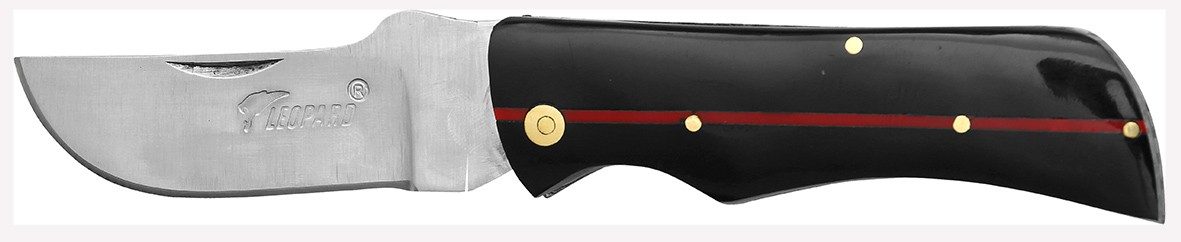

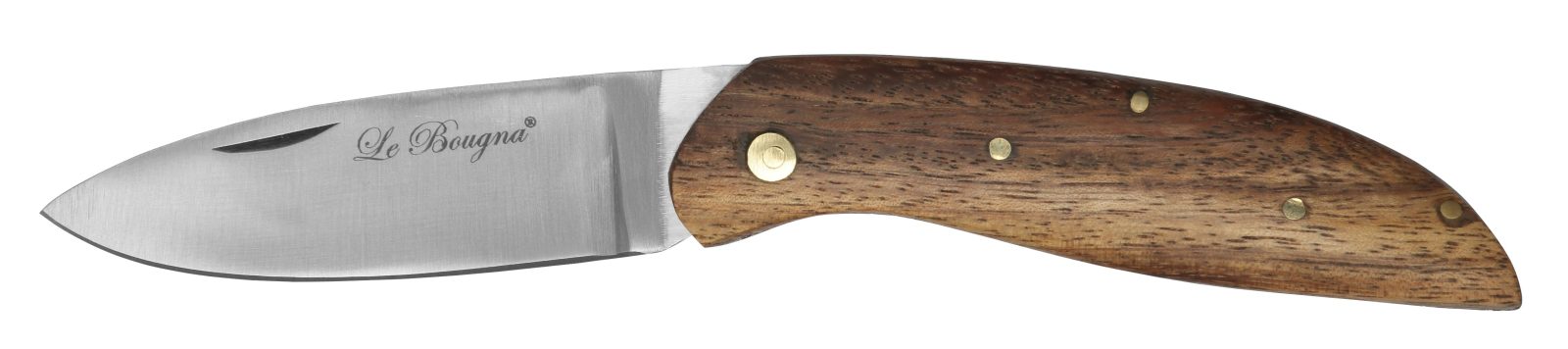
Teak Wood Handle Heritage Folding Knife – 10.5 cm Handle

This teak wood folding knife has a smoothly curved 10.5 cm handle and 9 cm stainless blade, no bolster, handcrafted in Pakistan.

$4.10
Unit price. Rates are degressive by quantity, size and material.
Wholesale $2.87
Ask about this item on WhatsApp
  • Factory direct Sialkot, since 1982
  • Worldwide shipping
  • Private label on request
  • Wholesale pricing by quantity

About this knife

This folding knife pairs a 9 cm stainless steel blade with a 10.5 cm teak wood handle, its smooth, single-curve profile built without a separate bolster. Handcrafted in Pakistan, it draws on a traditional pocket knife shape passed down through generations of local cutlers. A wholesale favorite for retailers wanting a heritage-style option in their folding knife range.

Specifications

Weight
0.111 kg
Blade size (cm)
9
Handle size (cm)
10.5
Blade
Stainless steel
Handle
Teak wood
Compatible sheath
Ref. 2100, sold separately
Knife Notes

Know-how from our Sialkot workshop

Questions & answers

Heritage teak folder: quick answers

Does the lock mechanism feel secure?

The test takes less than a minute. Let the blade travel to full extension and check it stays in line with the teak handle. Apply light pressure to the spine, then a little sideways pressure at the tip: a sound knife does not move. When you fold it, expect to make a deliberate push; it should never drop closed under its own weight.

What is the stainless Pakistan knife price for this heritage model?

Customers in Pakistan see the unit price in rupees (PKR) at the top of the page and can order by WhatsApp. For retail or distributor quantities, the price per knife falls as the order grows; ask on WhatsApp or by email for a wholesale quote.

What is the difference from the acacia classic?

Shape and size match: a smooth single-curve handle of 10.5 cm and a 9 cm stainless blade, no bolster. The difference is the wood. This one is teak, lighter and golden, while the acacia classic is a deep reddish brown.

Display & retail

Telling a heritage story at the counter

Customers buy a heritage-style knife for the story as much as the steel, so give them one. A small shelf card explaining that this smooth, single-curve shape draws on a pocket knife pattern handed down by local cutlers turns a plain-looking piece into a talking point.

  • Show it next to its acacia twin as a light-and-dark pair.
  • Display one closed and one open, so both the 9 cm blade and the teak curve can be seen.
  • In mixed shops, place it near tea, spices or regional food gifts.

Labelled clearly as a pocket knife made in Pakistan, it attracts buyers looking for traditional crafts rather than gadgets.

Sharpening

Honing between sharpenings with a small steel

Most dull edges are not worn away, just rolled over, and a honing steel straightens them in seconds.

  1. Hold a small honing steel upright, its tip resting on a folded cloth on the table.
  2. Place the heel of the 9 cm blade against the top of the steel at about 20 degrees.
  3. Draw the blade down and towards you so the whole edge, heel to tip, passes over the steel in one light stroke.
  4. Alternate sides for five or six strokes each, pressing no harder than the weight of the knife.
  5. When honing no longer restores the bite, move on to a whetstone.

This routine keeps a Pakistan stainless steel knife in daily service with very little effort.

Did you know?

Shipbuilders trusted teak long before knifemakers

For centuries, teak was a favourite timber of shipyards. Its natural oils resist water, rot and insects, and it barely shrinks or swells as humidity changes, so it went into decks, rails and hulls throughout the age of sail. That same stability makes it a sound choice for a knife handle that will meet rain and warm hands. Like many Pakistan-made knives in our range, this heritage folder uses it for exactly that reason.