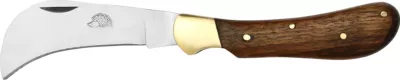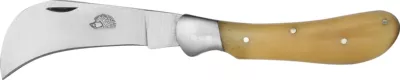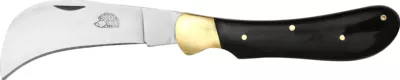
About this knife

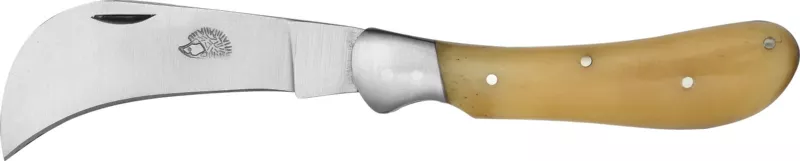
This serpette pruning knife pairs a 6.5 cm curved hawksbill blade with an 8 cm warm-toned bone handle and a polished inox bolster, sized for a compact everyday-carry pruning tool. Manufactured in Pakistan, its creamy bone finish offers a natural-material option in the compact size range. A wholesale item for retailers wanting a bone-handle compact pruning knife.

Specifications

Manufacturer
Pakistan Knives Factory, Sialkot, Pakistan
Weight
0.102 kg
Blade size (cm)
6.5
Handle size (cm)
8
Blade
Stainless steel
Handle
Bone
Bolster
Inox
Knife Notes

Know-how from our Sialkot workshop

Display & retail

Giving a small bone pruner a place near the till

Compact pruners are impulse purchases, and this one sells best where customers can pick it up. Hang a few on a hook strip beside the till or at the end of the seed aisle, at eye level, with one opened on a small stand so the 6.5 cm hooked blade shows its shape.

The creamy bone handle stands out against dark wood, so place it among the teak and acacia compacts rather than on its own: shoppers compare, then pick a favourite. A short card explaining what a serpette knife is for (roses, herbs, cuttings) answers the most common question before anyone asks it.

In late winter, move the display next to secateurs and pruning gloves; before the holidays, bring it to the gift table.

Made in Sialkot

How bone becomes a knife handle

Bone has been used for knife handles for centuries because it is hard, takes a polish and has always been far easier to obtain than ivory. In the Sialkot trade, as elsewhere, bone destined for scales is usually cleaned, boiled and degreased first, then dried slowly so it does not split, and only then sawn into thin, flat slabs ready to be shaped for a compact 8 cm handle.

Because bone is a natural material, tiny pores and darker flecks remain in every piece, even after polishing, and the tone shifts slightly from cream to warm ivory. On a Pakistan knife with a bone handle like this one, those marks are evidence of the real material rather than a defect, and they make each knife slightly different from its neighbour.

Care & maintenance

Habits that keep bone and steel looking new

Bone is tougher than it looks but dislikes extremes. A few habits keep this compact pruner as it was on the first day:

  • Never leave it soaking in water or lying in a hot car: bone absorbs moisture and can crack if it then dries too fast.
  • Wipe sap and soil off the handle with a barely damp cloth, then dry it.
  • Every few months, rub a trace of mineral oil or beeswax into the bone to stop it drying out.
  • Clean the 6.5 cm blade with warm water or rubbing alcohol before folding, and put a drop of oil on the pivot.
  • Keep it out of the dishwasher, where heat and detergent dull and dry the surface.

The inox bolster needs nothing more than a wipe.

Questions & answers

Natural bone, origin and price, answered

What is the folding knife price in Pakistan for this bone model?

US$5.60 per piece (PKR 2,068 for buyers in Pakistan). From 50 pieces the price drops to US$3.92 per piece. For a larger order, send us the quantity on WhatsApp or by email and we will quote a lower rate.

Will my knife look exactly like the photo?

Very close, but not identical. Bone varies naturally in tone and may show fine pores or flecks, so each handle is slightly different. The shape, the 8 cm handle length and the inox bolster are the same on every piece.