Pruning Knives Ref. 3816

Damascus Blade Pruning Knife with Rich Wood Handle – 10 cm Handle, Brass Bolster

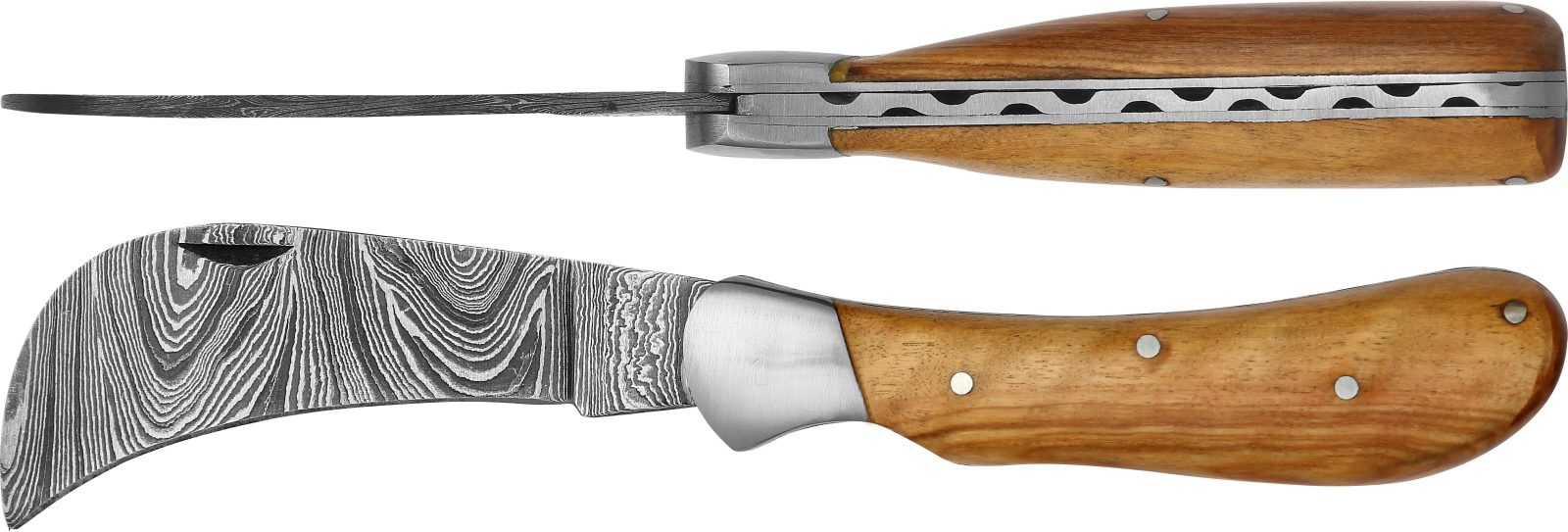
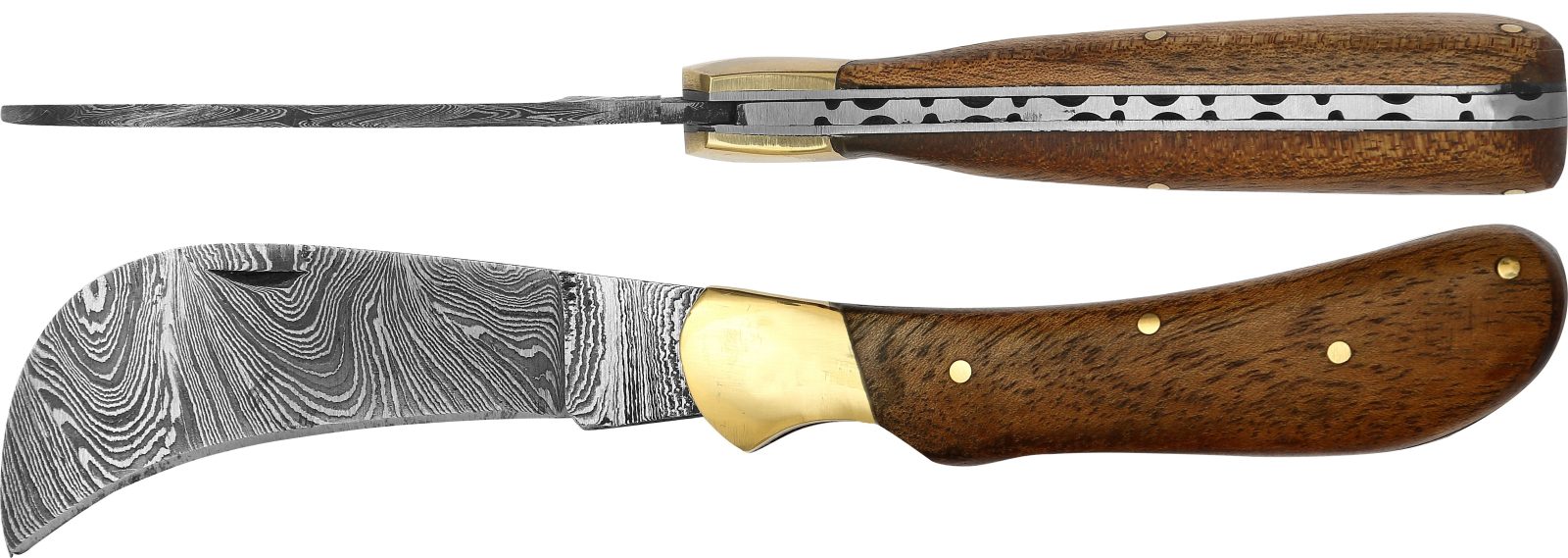
This Damascus pruning knife has a hawksbill blade and rich acacia wood handle, brass bolster, made in Pakistan.

$12.35
Unit price. Rates are degressive by quantity, size and material.
Wholesale $8.65
Ask about this item on WhatsApp
  • Factory direct Sialkot, since 1982
  • Worldwide shipping
  • Private label on request
  • Wholesale pricing by quantity

About this knife

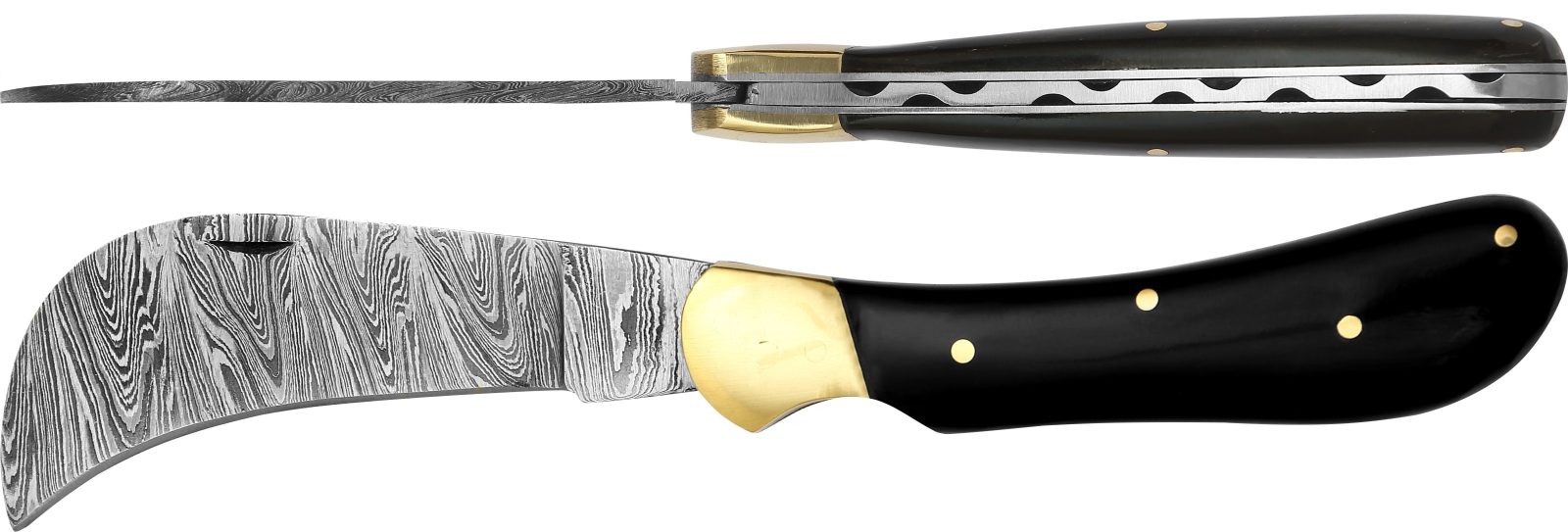
This serpette pruning knife pairs an 8 cm hand-forged Damascus steel hawksbill blade with a 10 cm rich acacia wood handle and a polished brass bolster. Manufactured in Pakistan, it's a premium alternative to the stainless steel pruning knives in the range. A wholesale item for retailers targeting collectors and premium gardening customers.

Specifications

Weight
0.094 kg
Blade size (cm)
8
Handle size (cm)
10
Blade
Damascus steel
Handle
Acacia wood
Bolster
Brass
Knife Notes

Know-how from our Sialkot workshop

Best uses

When a pruning knife is also a showpiece

The rippled 8 cm blade, rich acacia and brass bolster make this a knife people like to show, yet it still does a pruner's work. For buyers who want Pakistani Damascus that earns its place outdoors as well as in a cabinet, it suits:

  • Gentle rose and shrub pruning
  • Cutting grapes at harvest
  • A vineyard owner's gift
  • Collections of traditional patterns
  • Wine tasting and cellar events
  • Display in garden gift shops
Which one to choose

Damascus or stainless, acacia, teak or horn

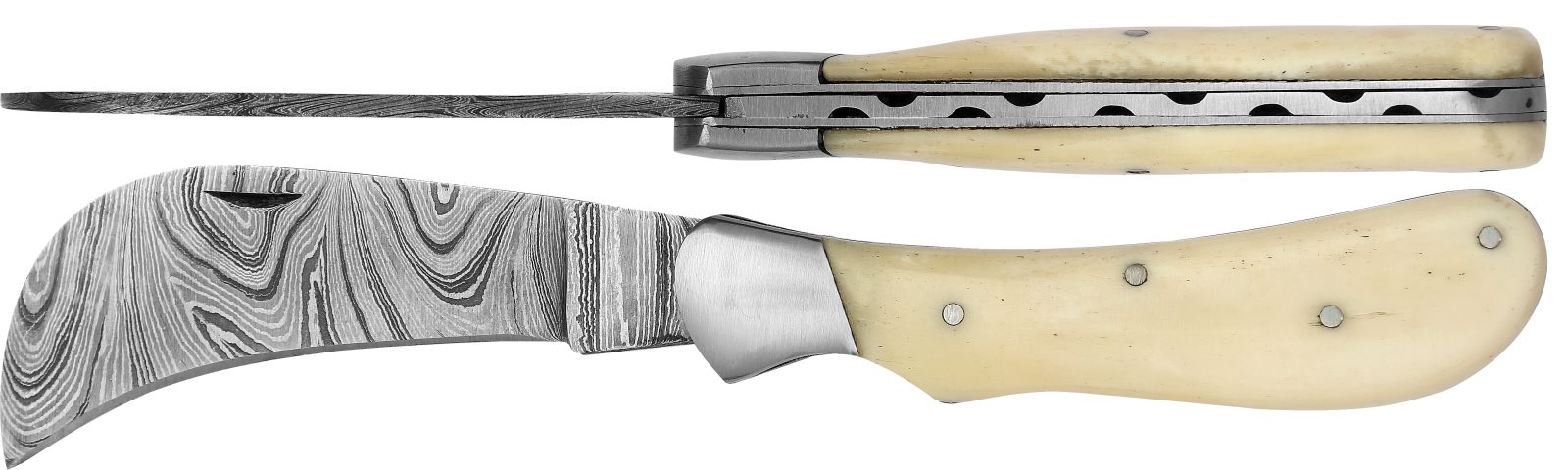
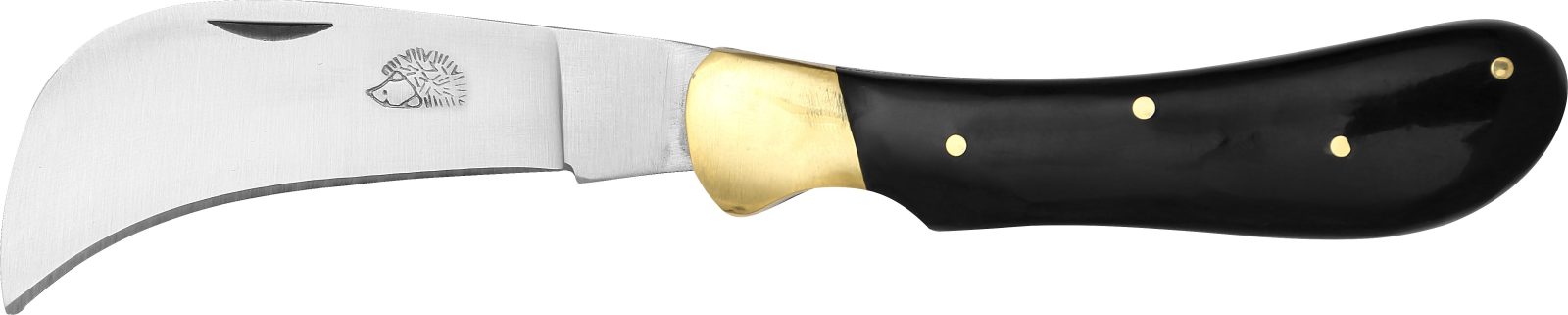
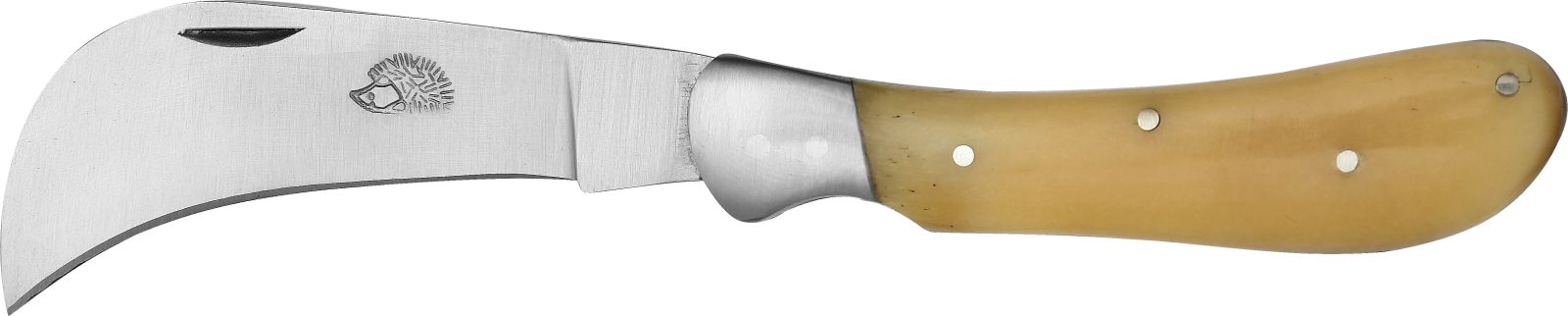
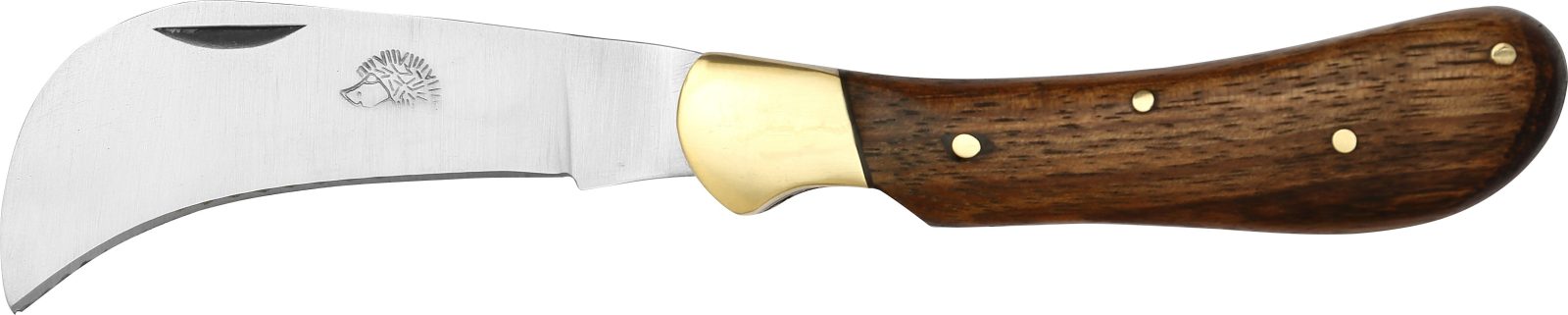
Many 10 cm pruners in the range share this hawksbill shape and 8 cm blade, so the choice comes down to steel and handle. This one pairs Damascus with acacia and a brass bolster, making it a warm, traditional Pakistan knife with a wood handle. The alternatives:

Questions & answers

Sap, pattern and price questions

Are Damascus knives from Pakistan any good?

Good ones are, and Pakistan, especially Sialkot, is a major source of pattern-welded blades today. Look for a pattern that runs evenly from the bolster to the point, without blotches or a visible weld line, and a blade cleanly ground along its curve. On this pruner, also check that the acacia meets the brass flush. Damascus asks a little more care than stainless: wipe it dry and keep it lightly oiled.

What is the Damascus knife price in Pakistan for this pruner?

The single-knife price is at the top of this page, in rupees (PKR) for visitors in Pakistan, who can also buy via WhatsApp. Collectors' shops and gift retailers ordering several Damascus pruners receive a lower unit rate; message or email us with your quantity for a quote.

Will sap mark the Damascus pattern?

It can if it is left to dry on the blade. Plant sap is mildly acidic and Damascus reacts to acids, which is how the pattern was revealed in the first place. Wipe the blade after each session, dry it and apply a thin film of oil, and the contrast stays crisp.

The story

Layered steel from early smiths to modern Sialkot

Smiths learned long ago that forge-welding layers of different steels, then twisting and folding the bar, produced blades with a flowing pattern. The technique was widely practised in early medieval Europe, where pattern-welded blades were prized possessions, and it faded only when better steelmaking made it unnecessary for strength.

The revival came in the late twentieth century, led by craft smiths who wanted the look for its own sake. Today Pakistan knife makers, many of them in Sialkot, are among the most prolific producers of Damascus blades, applying the pattern to hunting knives, folders and, as here, an 8 cm hooked pruning blade set in acacia with a brass bolster.