Pruning Knives Ref. 3817

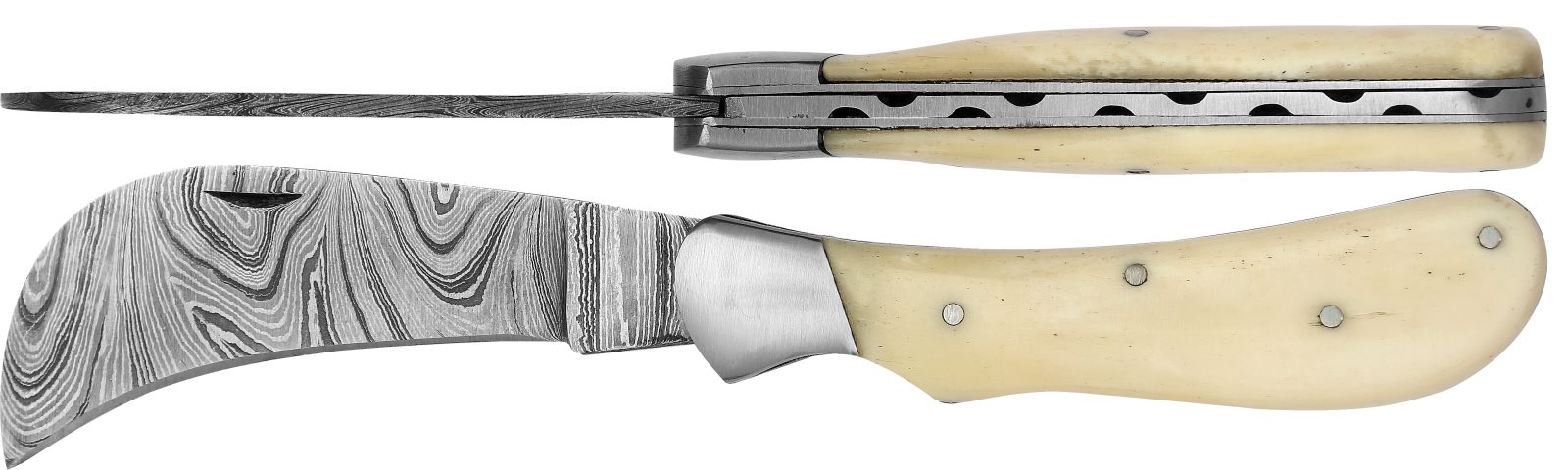
Damascus Blade Pruning Knife with Teak Wood Handle – 10 cm Handle, Inox Bolster

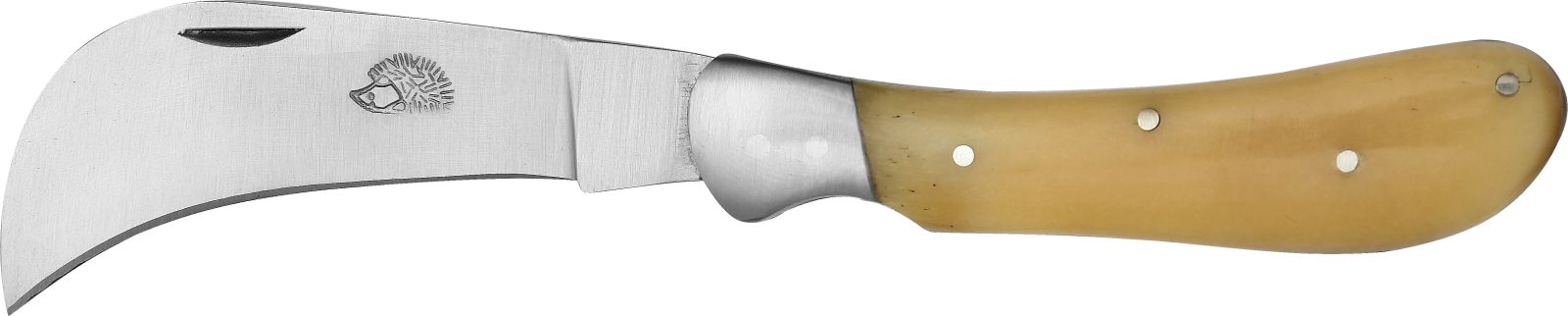
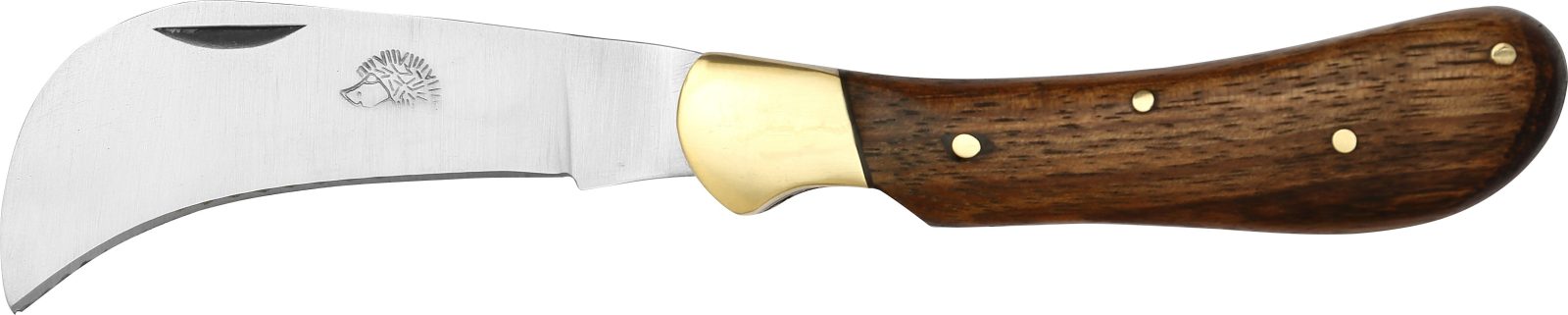
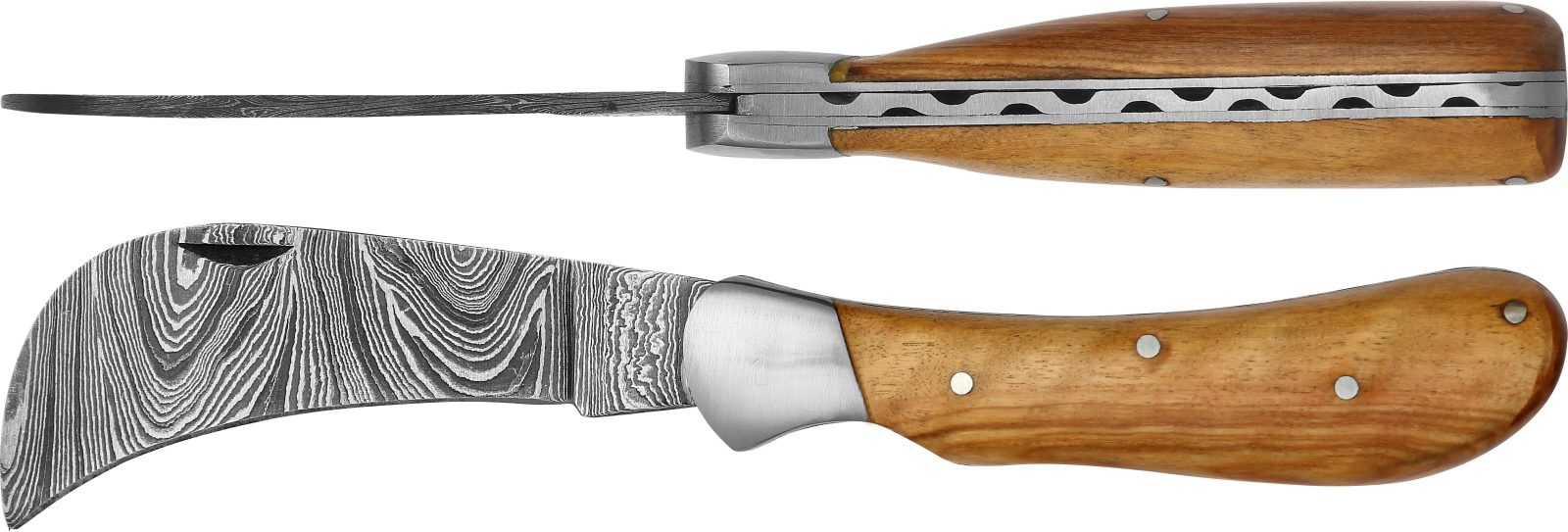
This Damascus pruning knife has a hawksbill blade and teak wood handle, inox bolster, made in Pakistan.

$12.35
Unit price. Rates are degressive by quantity, size and material.
Wholesale $8.65
Ask about this item on WhatsApp
  • Factory direct Sialkot, since 1982
  • Worldwide shipping
  • Private label on request
  • Wholesale pricing by quantity

About this knife

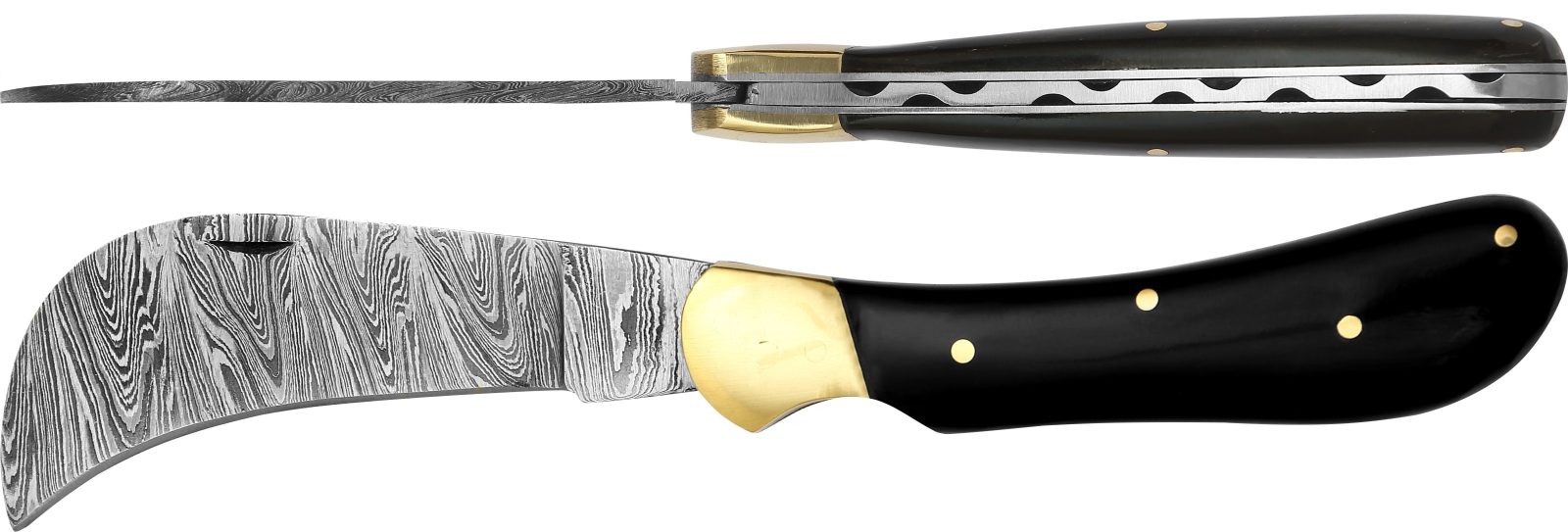
This serpette pruning knife combines an 8 cm hand-forged Damascus steel hawksbill blade with a 10 cm teak wood handle and a polished inox bolster. Manufactured in Pakistan, it's a lighter-toned companion to the acacia wood Damascus version in the same range. A wholesale item for retailers wanting variety in premium Damascus pruning knives.

Specifications

Weight
0.102 kg
Blade size (cm)
8
Handle size (cm)
10
Blade
Damascus steel
Handle
Teak wood
Bolster
Inox
Knife Notes

Know-how from our Sialkot workshop

Display & retail

Lit glass cases sell Damascus pruners

Damascus sells on sight, but only if the pattern is close enough to see. Keep this pruner in a lit glass case at counter height rather than on a wall, with the blade open and angled towards the light so the layers ripple as customers move.

  • Group it with the other Damascus pruners and let customers choose by handle: teak and inox read lighter and more modern than horn or acacia.
  • Place a stainless teak pruner nearby as a working alternative; the comparison makes the Damascus step-up obvious.
  • Add a short card on what a Pakistan Damascus knife is, and note that each pattern is unique.
  • Bring it forward for Father's Day, retirements and the run-up to the holidays.
The story

Wootz, Damascus and a misleading name

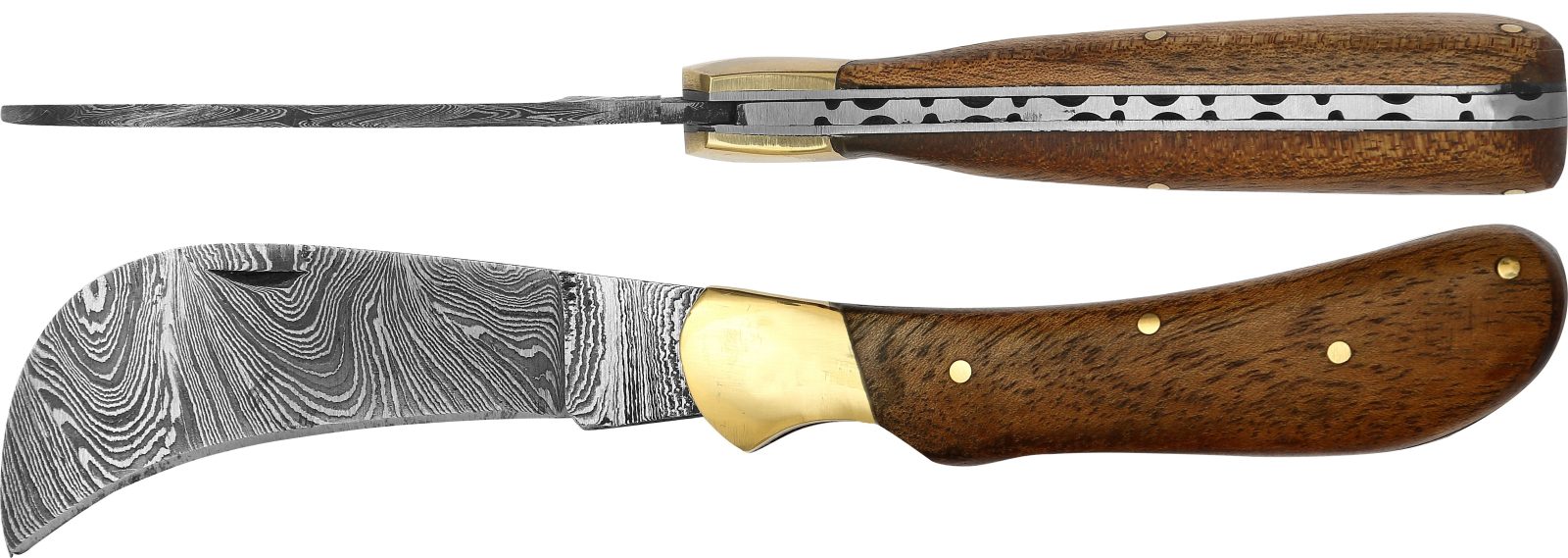
The word Damascus first described something rather different from this blade. Steel blades sold in the markets of Damascus were often forged from wootz, a crucible steel made in India and Sri Lanka, whose watery surface pattern came from the structure of the steel itself. The skill to make it faded away by the nineteenth century, and the exact method is still debated.

Modern Damascus, like the 8 cm blade on this pruner, is pattern-welded instead: layers of steel are forge-welded, folded and etched to show the figure. The name stuck because the two look alike. Here that pattern meets a golden teak handle and a polished inox bolster, making a Pakistan knife with a wood handle that carries a long story in a pocket-sized tool.

Quality check

Intake checks that protect a retailer's margin

A Damascus pruner sells at a higher price than stainless, so customers inspect it more closely too. Look at each piece in good light before it goes into the case:

  • The pattern runs continuously from the inox bolster to the point, without dull patches or an obvious seam.
  • The etch is even on both faces of the 8 cm blade.
  • Teak scales are flush with the bolster and free of cracks; the grain naturally varies.
  • The blade opens to a firm stop and folds back centred, its point clear of the wood.
  • There are no rust spots or fingerprints: wipe and oil any sample that has been handled.

Shops buying Pakistan knives wholesale can add these checks to their usual intake routine.

Questions & answers

Using a Damascus pruner, and what it costs

Are Damascus knives from Pakistan any good?

They range widely, so the details matter more than the origin. A good Damascus blade shows a clean, consistent pattern, a well-ground edge and a handle fitted without gaps. Sialkot's workshops have produced Damascus folders and fixed blades in large numbers for years, and this pruner brings the same work to a hawksbill blade, set in teak with a polished inox bolster. Treat it like any Damascus: keep it dry and lightly oiled.

What is the Damascus knife price in Pakistan for the teak version?

You will see the unit price at the top of this page; in Pakistan it is shown in rupees, and orders can be placed over WhatsApp. For several pieces, whether for a gift shop or a collectors' range, the rate per knife falls with quantity. Write to us by email or WhatsApp for wholesale terms.

Can I use a Damascus pruner for real garden work?

Yes, for light to moderate pruning, grape harvesting and cutting flowers. Clean the blade promptly, because sap and wet soil left on Damascus can stain it. For heavy daily pruning in all weathers, many growers keep a stainless model for work and this one for show and special occasions.